Thursday, July 20, 2006

the other drug war

Sometimes I go through my old posts to see what finer points I might have overlooked at the time, glossed over due to an insufficiency of knowledge, or got completely wrong.

Although my intellectual background was once staunchly politically conservative in nature, and necessarily consequentialist, I think (and hope!) that I've shed that psychological baggage to the point that while recently reading Hoppe's Democracy: The God That Failed, I was made painfully aware of how far I've come as I cringed over his critique of societal structure being unnaturally corrupted via the welfare/warfare state. I've also become more sympathetic to the the left-libertarian movement, so I don't have a dogmatic aversion to some leftist-aligned agendas such as feminism, abortion or being anti-war. Of course my position as such has my folks scratching their heads wondering if I'm a conservative or a liberal, but overall I think they're slowly learning!

What sort of stumped me before, and seems embarrassingly simple now, was the question, or have you, the free rider "problem". The "problem/question" includes a presumption that I no longer assume; that maximum societal efficiency can be derived through instances of coercion. I now understand that only through free, uncoerced, and voluntary exchange can individuals (and ultimately society) maximize their wealth.

Just to go back to the question though, there was also a presumption that the lack of monopoly privilege for all sorts of intellectual property would stem the well of creativity, as presumingly there would be no way to reward and incentivize the creator into sharing his knowledge. Supposedly without this incentive, we wouldn't have new medicines as nobody would want to invest in the R&D, conduct long clinical trials, just to have some competitor copy their formulation and manufacture a low-priced knock-off.

And so a while ago, Kevin Carson and His Merry Men brought up many good points that lay the blame for high R&D costs at the governments' door. Aside from that, Kevin argued that the patent system in place distorts pharmaceutical research into compounds which are more readily patentable, and not those which are most innovative and useful to the consumer, a direct attack against the idea that monopoly incentives are beneficial to Joe Sixpack Individual.

As Stephan Kinsella, an ardent defender of private property rights, and the warrior leader of the anti-IP intellectual battle evisceratingly writes on the Mises blog:
Hey, I know--let's trust the same government who set up the FDA costs and roadblocks to set up a patent office, and give you partial ownership of others' property to incentivize you just enough to overcome the costs they imposed on you with the FDA and taxes and regulations. Beautiful! And if that's not "enough" incentive, establish a government panel of "experts" to give you "enough" of a reward paid by taxpayers. Beautiful! I like it!

Wednesday, July 12, 2006

broken windows raises wealth


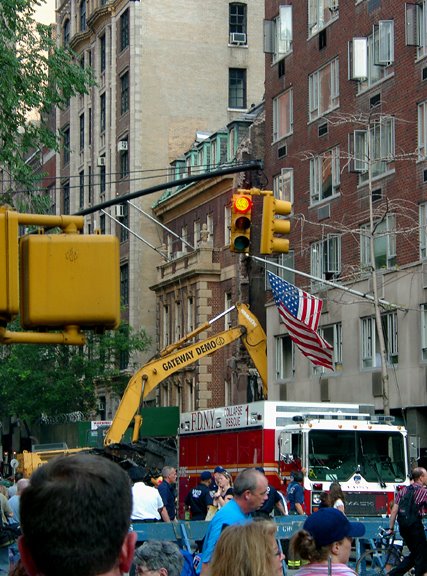
In what I think is the first time I've philosophically agreed with something written in the NY Post, the paper speculates that the explosion that destroyed a Midtown Manhattan townhouse actually increased the value of the property!

Although we all know that broken windows do not generally lead to prosperity, in this case, where a property was artificially constrained under the unduly burden of landmark and zoning regulations, the market value of the property was effectively inhibited and lowered, hence lowering aggregate societal wealth.*

As I have wrote several times in the past, the equivocation of rising property prices to an increase in real wealth is nonsense. Falsely believing in such leads many people to consider the effect of landmarking to be beneficial (and on net to outweigh the costs of such market intervention), since empirical evidence seems to correlate the event of landmarking to an increase in property values within the neighborhood.

Of course once you realize that landmarks does not increase wealth, and essentially is an artificial reduction in housing supply, we can expect property prices to shift somewhat upwards in relation of a higher ratio of bidding to a decreased housing market.

Now although in this instance real capital goods were destroyed, this was presumingly an act of "creative destruction", because the owner bypassed the medusa of imposing bureaucrats who wish to freeze New York City into a fairied vision of its past. In doing such, the owner opened up an opportunity for a developer to construct a building more in tune with the market demand for its available floorspace, bringing along greater societal wealth in the process.

Sadly enough, the granfalutin' head of the odious landmarking commission, Robert B. Tierney, in his vain glory visited the site of the explosion yesterday to survey the damage, and to proclaim to all New Yorkers, that fear not, he will make sure that whomever comes along to construct a new edifice will have to survive the gauntlet of the landmarks commission when seeking approval for the new construction, an open invitation I'm sure many will want to pass up.


*This is not to say that in the truly free market the condition favorable to an even higher density construction would be likely, because current housing supply is shaped mostly in part by arbitrary zoning ordinances, varying neighborhood densities to a degree which would be unlikely to arise under laissez faire. At the same time, in the real world, demand on this particular parcel is sharpened because of constraints elsewhere, helping to cartelize the housing supply to the strata of society who want to keep it to themselves.

Friday, June 23, 2006

down with schooling

But hey, I'm totally for education. When I explain this others, I can see the look of consternation looming over their faces, as they seemingly think, "what the hell is he smoking now?"

Well for once, I can at least point to this wonderful article by John Taylor Grotto who writes:
Mass schooling of a compulsory nature really got its teeth into the United States between 1905 and 1915, though it was conceived of much earlier and pushed for throughout most of the nineteenth century. The reason given for this enormous upheaval of family life and cultural traditions was, roughly speaking, threefold:
1) To make good people.
2) To make good citizens.
3) To make each person his or her personal best.

Alexander Inglis's 1918 book, Principles of Secondary Education, ... breaks down the purpose - the actual purpose - of modern schooling into six basic functions, any one of which is enough to curl the hair of those innocent enough to believe the three traditional goals listed earlier:

1) The adjustive or adaptive function. Schools are to establish fixed habits of reaction to authority. This, of course, precludes critical judgment completely. It also pretty much destroys the idea that useful or interesting material should be taught, because you can't test for reflexive obedience until you know whether you can make kids learn, and do, foolish and boring things.

2) The integrating function. This might well be called "the conformity function," because its intention is to make children as alike as possible. People who conform are predictable, and this is of great use to those who wish to harness and manipulate a large labor force.

3) The diagnostic and directive function. School is meant to determine each student's proper social role. This is done by logging evidence mathematically and anecdotally on cumulative records. As in "your permanent record." Yes, you do have one.

4) The differentiating function. Once their social role has been "diagnosed," children are to be sorted by role and trained only so far as their destination in the social machine merits - and not one step further. So much for making kids their personal best.

5) The selective function. This refers not to human choice at all but to Darwin's theory of natural selection as applied to what he called "the favored races." In short, the idea is to help things along by consciously attempting to improve the breeding stock. Schools are meant to tag the unfit - with poor grades, remedial placement, and other punishments - clearly enough that their peers will accept them as inferior and effectively bar them from the reproductive sweepstakes. That's what all those little humiliations from first grade onward were intended to do: wash the dirt down the drain.

6) The propaedeutic function. The societal system implied by these rules will require an elite group of caretakers. To that end, a small fraction of the kids will quietly be taught how to manage this continuing project, how to watch over and control a population deliberately dumbed down and declawed in order that government might proceed unchallenged and corporations might never want for obedient labor.

That, unfortunately, is the purpose of mandatory public education in this country. And lest you take Inglis for an isolated crank with a rather too cynical take on the educational enterprise, you should know that he was hardly alone in championing these ideas... Men like George Peabody, who funded the cause of mandatory schooling throughout the South, surely understood that the Prussian system was useful in creating not only a harmless electorate and a servile labor force but also a virtual herd of mindless consumers. In time a great number of industrial titans came to recognize the enormous profits to be had by cultivating and tending just such a herd via public education, among them Andrew Carnegie and John D. Rockefeller.

Wednesday, June 21, 2006

pouring lemon juice on a paper cut


As you probably can guess from the subtitle above, discussions of real estate usually interest me.

And sometimes they irritate me. Ok, most times, but that is because I can get pedantic when it comes to the most-misunderstood business that everyone in the world has to deal with at some point in their life.

So then please allow me to quote from Brownstoner.com, a popular local real estate blog, in an article titled "Saving the Short-Sighted From Themselves" in regards to the recent landmarking "victory" in Riverdale, NYC.

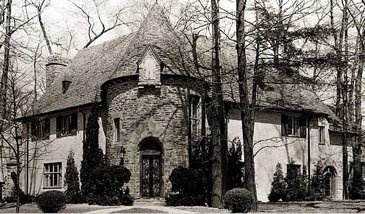
We knew a hotly-contested decision on landmarking the 250-odd houses that make up the Bronx enclave of Fieldston was imminent, so it was with some relief that we read this past weekend that cooler heads had prevailed and that the City Council had in fact ratified the designation back on April 26... As for the dopes who fought the landmarking, they'll be thanking their neighbors as their property values rise; and if they really miss being able to build some oversized monstrosity, they can cash in and move.
As usual, he has the positions reversed. The folks threatening their neighbors with glorious state-sponsored violence and robbery are the so-called "cooler heads" whom have prevailed, whilst the victims of land-robbery are dopes for trying to preserve their wealth.

But of course, the elitists know what's best for New York, even when they are totally wrong.

Because the Brownstoner blog is not the right setting for a critical discussion of simple economic topics, I was going to write something here on my blog about it, as I have in the past.

The first mistake of course is the implicit assumption that rising asset prices are beneficial towards the aggregate wealth of society. It's not, and counterfactually, it signifies that aggregate societal wealth has actually decreased.

Also, the question of cui bono? goes unexplored.

Who exactly gains from a reduction of available land resources? Certainly you might expect that many land owners will be in favor of landmarking, because a reduction in supply, without a commensurate change in demand (for an inelastic good), will lead to higher prices as the scarce factors are bid higher and higher.

But while the sellers are happier to receive higher prices, the buyers as a whole have lost by that very same amount! (Thank you Bastiat and Hayek.) In short, by their same scalar measurements of interpersonal utility, the sellers have seemingly gained at the expense of the buyers.

But that is not all. The many others that are the 'losers' of this policy are the countless individuals who cannot afford the higher prices and simply seek housing in a different market. In short, such wondrous policies drive the low and middle class from the neighborhood, which you would think make the egalitarian central-planners think twice. But no, they are busy tsk-tsking the "dopes" who opposed the landmarking policy, which is supposedly in their favor as the current owners.

The second mistake is confuse prices, with value. To quote LewRockwell.com author Paul Tolnai:
Let's look at the housing stock of a country. Within the last few years, many homes have sold for twice the price of what they fetched, say, 5 years ago. OK, so does that mean we can extrapolate these marginal prices to infer that the value of our housing stock has doubled, and hence we as a nation are wealthier? Looking only at the housing stock that existed 5 years ago, has its utility increased? How does wealth relate to prices?

According to the Fed, these price increases are evidence of the robustness and health of the American economy. We are now supposedly wealthier. But isn'’t this like referring to increasing "No Child Left Behind" test scores to answer the question of the day: "Is our children learning?" A given house has a fixed utility. Its utility does not go up simply by having occupied it for the last 5 years. If its price has gone up dramatically, is one dramatically wealthier?

Wealth it seems to me is related to the production of goods (and services) that people want to have (essentially manufacturing) and is not determined by prices, although price movements may be indicative of changes in wealth. If that were so, what would the relationship be? If increasing the supply of goods that people want to buy, whether through importation or domestic production, means more wealth, where would price fit into this picture of wealth measurement? Let's go back to housing.

To some degree, increasing the manufacture of houses would increase wealth, but this would, ceteris paribus, have a depressing effect on house prices. So I reason that falling prices is a good measure of wealth creation (such as the prices of electronics and computer hardware). In the 19th century, there was a slow decrease in the price level over the entire century (excepting the Civil War era - think of Lincoln's greenbacks, which were later declared unconstitutional). It would seem to make sense that with a steady amount of money, individual ingenuity (human action) is going to tweak the production process every year to make it more efficient (less resources for a given output) to produce a given good, which will tend to lower the price. The price reduction for this good will free up capital to produce other, or better goods - all within a framework of falling prices.

Notice I haven't addressed the merits of landmarking, because I don't think there are any to be discussed. I personally feel that piles of stone and dirt, however beautifully arranged, do not undergo a transcendence of any sort, and I wouldn't threaten violence over an owner's personal decision whether to preserve or to destroy them.

I also assume that the owner will do whatever is his best interests to increase his wealth, whether that means voluntarily preserving the structure, or demolishing it. And yet the only way to increase the aggregate of societal wealth, is on that very personal basis.

So in short, its the myopia on the part of the economic-illiterate policy wonks, that destroy societal wealth, escalates and reifies class conflict, and than has the gall to pour lemon juice onto the papercut they dealt you, with their caustic slaver.

Thursday, June 08, 2006

back, with extra gadgety goodness

I just got back from a wonderful two week vacation to Israel, with quite a number of insights I have never appreciated before. I am not quite ready to explain myself, but I hope to some other time.

In the meanwhile I thought it worth sharing my wonderful experience with a digital picture frame from Philips. After scouring through tens of Amazon customer reviews, dozens of manufacturer and reseller websites, numerous e-text specification manuals, I have come to the conclusion that the Philips 7-inch Digital Picture Frame w/Clear Frame was my best solution.

In all regards that I considered important; clarity (higher screen resolution), great color reproduction, screen size, capabilities, and product aesthetic, I believe that ex ante post these considerations have been well met by this product. Although this particular model was a bit pricier than its competitors, the tradeoff in those aforementioned qualities was worth more to me than the difference in price.

The best part about all this was yet to come. After my wife and I arrived home from the airport, I picked up the digital frame from my parents where it was shipped to, slapped in a memory stick fresh with vacation pictures, and set it up in our kitchen, playing back a montage of these very recent memories, much to my wife's very suprised delight.

Tuesday, May 23, 2006

i'm outta here...

I will going away for the next two weeks. While I will be lugging around my newly-purchased MacBook, I doubt I will have the opportunity to write out any 'profound' material related to this blogs' interests, although I might be tempted to post some snapshots and general travel commentary; but don't count on it.

I know my output volume has been dropping to historic lows, but this is simply the result of an increased output into other activities: reading, movies, studying, and of course, towards the disutility of labor (one must find a way to pay for his expensive computer toys, no?)

Peace and Anarchy Out!

-iceberg

Tuesday, May 16, 2006

comparing apples to non-apples

Being an aficionado of most-goods Apple, it usually means that I come across some industry analyst opinion piece which attempts to compare Apple Computer Corp.'s offerings to those of the rest of the industry util-to-util.

While the money price is the indicator most of use to make comparisons of utility in the indirect-exchange economy, for better or worse, the money price is usually the only cost taken into consideration by these analysts.

The problem with that of course is that while you can compare physical features, dollar-to-dollar, you cannot easily integrate the psychic benefits provided into your utility comparison.

For instance, what price can an analyst quantify which would measure the benefit of not having to deal with computer trojans and viruses and the resulting peace of mind associated with that?

How many utils do you get from the use of a superior operating system which works as designed, hiberbates and awakes instantaneously, and almost never, never, ever crashes?

How do you compare the sheer aesthetic bliss from a unified graphical user interface, the ease of controlling its functions, and the neat integration of hardware to software (iPod <--> iTunes; iSight <--> iChat, PhotoBooth, iMovie; Apple Remote <--> FrontRow, etc.) ?

To ask those questions are to answer it, and the fact that Apple is sucessfully selling computers, and most importantly, profitting from their operation, proves that to the contrary of naysayers, Apple is providing a good which satisfies the consumer demand for computer equipment preferred over the next best alternative.

What I'm not saying is that price comparisons are entirely irrelevant; rather that I am attempting to stress that there are other values here, which although they cannot be legitimately quantified, they are at best approximated in the money price, and will require the economic actor to subjectively assess the ordinal utility so as to make the correct purchasing decision. However, to simply compare dollar value is a bogus operation, which yields the same in results (the GIGO rule)



I am neither a sociologist, nor a psychologist by occupation, but I would hazard that this erroneous view of what money is, emerged with the appearance of bank notes, and later reinforced by the unbacked, fractional-reserve type into what people believe it ought to be, but isn't.

Money we know, is a good we use mostly for its exchange value, but before that it first had to be desired for its use value. Precious metals, because of their relative scarcity, their durability, the ease of storage and divisibility historically led to it's wide-spread adoptance as money, the common-denominator good, which many people are willing to exchange for other goods, and to hold onto for later exchange. Logically it follows, that the more of it you have of this good, the more of it you can exchange for other goods for the benefit of your ultimate consumption.

The other side of the coin, so to speak, is the portability of money. Gold, although highly desired by many, is difficult to use in everyday, small transactions. Sure you can clip a coin into pieces, but it was rarely done so very accurately. Others still used gold for small transactions, by having ground into a fine, easily divisble dust, which had to be carefully tied up in a kerchief until you were rung up at the dry goods store's register.

Another problem you would encounter is that of safety. Clinking coins in your pocket or bag is a loudly announced appointment with your local cutpurse. And although a bullion can buy you practically anything, should it be misplaced or stolen, it will represent a very heavy loss of exchange upon the lossee, thus being a burden on the sound mind and wits of the holder.

To counter those problems, the notion of banks evolved, whence you would deposit your valubles, and recieve a warehouse receipt that acknowleged it. Indeed, you payed the bank for the privilege of safeguarding your money stock. Now, instead of lugging along a gold bullion to buy a house, you would simply hand the seller the receipt to the same good, giving him title to 'one gold bullion' at So-and-So Gold Warehousing Extraordinaires & Co.

Unfortunately, it was at this point, that along with convenience of light-weight paper specie, came the abstraction of money, psychologically setting it apart from other goods. It's now common belief that if you duplicate the paper certificate, you can create goods out of thin air (for practical consideration, please observe the Federal Reserve and the lesser smalltime counterfeiters who operate under this fallacy.) Due to my involvement in the real estate industry, I first observed signs of this fallacious nominal illusion, or the "nominallusion" as I like to shorten it.

The nominallusion is the faith by those who believe, that when you have a lot of numbers attached to a real estate transaction, it's indicative that the value of the transacted property has risen astronomically, when in fact, the value may have dropped in real terms, and it's only that the price of money has fallen significantly in real terms. However, the dogged insistence of comparing a historic price with present prices and arriving at such conclusions of value, when the vehicle of comparison (money prices) has been so tampered with as to make the information conveyed utterly useless, is quite and regrettibly pervasive.

The potential of moral hazard only looms larger under such illusions, especially when artificially low-interest rates spur entreprenuers and financial institutions into collosal malinvestment of capital.

To correct this mass delusion, we would have to educate-away the primitive nominallusion of money, and to reintroduce the concept of sound money. Until that time, we have the blind leading the blind in their quest to objectively compare apples to apples.

Saturday, May 06, 2006

funcusion

Oftwhile, in the heat of internet discussion, one may be called out for not being "practical" and "realistic", as though the lack of an empirically encountered basis should bear significance when discussing both the ethical principles which are being ignored, and some of the overlooked ramifications of unsound policy.

For example, free marketeers are often asked of to prove the hypothetical posed by their understanding of economic theory. They ask, "Iceberg, where do these mythical unzoned cities exist?" or one of the old standard canardic "what if's..." followed by what they think is an unsolvable problem which would hence justify state sponsored aggression because they are incapable of thinking the 'problem' through.

As the topic of real estate is within the area of personal interest, my participation on preeminent R.E. blogs makes certain that no harmful governmental policy goes uncriticized and scorned.

Such was the case more than once this week. One may witness the full exchange here of one such discussion, but here were my final words:
I humbly await further explanation of your comments, as I have difficulty understanding what exactly is unrealistic, and why pragmatics matter in discussion of economic or urban theory.

The entire point of discussing theory is to engage in hypothetical and counterfactual speculation, to try and better understand if society is better or worse off due to government intervention into the marketplace, in its regulation of zoning, usage, landmarks, aesthetic, and construction method & materials.

There are reasons to oppose these regulations. First, because they tend to reward certain parties (those with lesser restrictions) at the expense of those parties with higher restrictions.

The restrictions, on their very own raise the bar of entry, hence monopolozing the industry in favor of the firms who are best at cutting through the bureaucratic red tape (i.e. Rockefeller was notorious for his support of industry regulations, in which his firm was more able to implement than other firms, thus helping him drive out his competition with government fiat).

Second, recognizing that no one, or small group of people are all-knowing, it will be impossible for them to divine the far-reaching ramifications of the policies they enact. For example, do the proponents of downzoning take into consideration that they are the foremost cause of driving out the middle-class from the city? Will they be willing to make that trade-off if they knew upfront that the price of housing will go up by x and y amount of people will not be living here because of this narrow-minded policy?

Aside from the economics, I am not too concerned with the arguments calling for "livible cities" or "sustainable development", because first, their arguments are not grounded in reality, but rather emotion, and second, the fault, if any would lie at the doorstep of the prior government interevention which brought about the market aberration they detest. If anything, these people should be clammering for the deregulation of the market to straighten things, not to further strangle and distort them.

I also happen to believe that developers, just like everyone else, usually intend to stay in the game for long-term, and thus are driven toward long-term profitability as their goal, and not short-term embezzlement or fraud.

That being the case, it would only make sense for developers to build the most attractive, livible housing stock as possible. Why you ask, when they could just as well build shoddy housing?

Well, if you would engage in just a tad of hypothethicals, and imagine that there is no artificial limits to how much housing any developer can build, you must imagine too that he will have very serious competition.

Why would they choose developer A's units, when developer B will give them a better unit for the same price?

Hence, it goes to prove that by artificially limiting the amount of buildable space, one of the ramifications is that developers are not competing* anymore in terms of quality, since there is a monopolized stock of which they control, and which is difficult for another developer to mitigate (witness the attempt by the Jack Parker Corp. to increase the housing stock in the west village.) In essense, the government's meddling has both decreased housing stock, housing quality, raises the prices, and later the costs, and the crowning glory- it makes the neighborhoods unaffordable to the middle and lower classes.

*In essense, we have a "market failure" even though the failure was caused by government intervention in the first place.

In a later post, someone labeled me a "free market Pollyanna", which is to say "a person regarded as being foolishly or blindly optimistic".

This title which I find humourous, probably stems from the mistake that we libertarians, like everybody else in the political world, have a "correct" answer to all issues and problems.

As we all know, it's certainly not the case.

The correct answer is that we don't know all the answers to all the "problems". We can't be sure if they are even problemetic. And we certainly don't think that government is the best vehicle to solve these "problems".

In any case, I wrote back:
Thank you, I will take that as a compliment coming from a monomaniac who makes false pretentions as to the astuteness of central planners who must be omniscient in regards to all the far-reaching effects of their policy recommendations.

If anything, I'm the one who is claiming not to have advanced or absolute knowledge of optimal urban planning. Anyone who claims it is possible, is the greater pollyanna and falls into the category of maintaining 'fatal conceit'.
I thought it appropriate that the very day before, Manuel Lora's "Libertarians Are Not Socialists, Prophets, Omniscient or Specialists in Everything" appeared on LRC, and here is my favorite bit:
The problem starts when the "viability" of freedom becomes contingent upon the "answer" to those questions. That is, if the "right" and fully satisfactory answer is not achieved (ignoring that no such answer could ever be 100% correct), then somehow the desire for liberty is lessened and statism creeps back in.

"How would roads work? How can a flu pandemic be prevented? What about organ trafficking? Would we need car insurance? How much? Who would determine that? What if drugs are cheap and widely available? I don’t want people to have AK-47s! What about licensing and standards? If everyone can make their own money, then it’s going to be chaos!"

So let me answer the question as clearly as I can. I am not a socialist!

Wednesday, May 03, 2006

an offer he couldn't refuse


I know this is but a tad late, but I couldn't help but post this little tidbit:

There was a recent breakthrough in the negotiations between the World Trade Center (WTC) leaseholder Larry Silverstein and the triumvirate of government. Just so we don't miss anyone, these parties would be

a) the Port Authority of NY & NJ,

b) the New York City government, its dictator, and its wholly-owned subsidiary, the Empire State Development Corporation

c) the clowning-glory, Governor Pataki and his goons, er.. administration

Basically, the story is that Mr. Silverstein was presented with two choices by the thugs-in-office:

A) Take this pittance of cash, give up your lease and walk away from the site

B) Give up ownership for the main site, and we will let you keep and build the few other sites, and even allow you to build the main site for us.

Of course, unmentioned as always was the threat of using eminent domain which only allowed Mr. Silverstein to choose between A or B, instead of perhaps C, which funnily was never mentioned.

Choice "C" was of course, recognizing that the property in question belongs to Mr. Silverstein, who clearly did not find either of the other two "choices" to be sufficiently appealing.

The weird thing is that the press never saw through this sham, and somehow treated it as though Mr. Silverstein is the party who is unwilling to negotiate, and therefore is an obstinate, unsavory character, perhaps undeserving to be the one chosen to build the Freedom Tower.

Although the eminent domain process was not used, the mere threat of using it accomplished the same result, which was to force a landowner into a deal that he was not interested in.

I guess this all goes to show that it's not the Onion, but rather government which is the greatest source of satire and irony, ever. After all, if the "Freedom Tower" is ever built, it will be on lands with a history of private property violations.

Monday, May 01, 2006

escaping the state

If I had the use of a time traveling machine, I could imagine going to meet an earlier version of myself. I'm sure I would try to engage my past self why in the future I began to fervently hate the state and why I support abolishing it. I'm afraid to admit it, but I believe that my earlier self would dismiss my future self as imbalanced and insane. In short, I wouldn't know how to recreate the act of getting my past self to be understanding and sympathetic to my future self's views, even though I will know that it's entirely possible since it already has occurred once before.

Thinking back on my own "enlightenment", of how I broke through and cast off the shackles of the state from my mind and conscience, I would only like to extend this courtesy to my fellow human beings. The question I guess has always been how to accomplish this.

I've only heard of one major attack against this meme; cognitive dissonance. The hope is that if one constantly points out how the state acts immorally, that most people will wake up to this and finally realize what really irks us libertarians.

The only other idea I've heard so far is Vache Folle's "Re-education Camps", which admittedly sounds like a reasonable proposal, due to the fact that it will only be consistent with the morality of the people jailed inside it. Once the inmates transcend the enslaved morality of statism, they will be free to come and go as they please. This I believe is 100% compatible with libertarian ethics, which operates similarly in the regard of which we would be acting consistent to treat thieves and murderers with the same principles they espouse (i.e., using force or coercion to take back one's property or compensation.)

Other than that, I've only recently been cognizant of the parallel between statism and the history of African slavery while reading Thomas DiLorenzo's The Real Lincoln. Now imagine yourself living 150 years ago. If you hold similar values to my own, you would probably support the Abolishment party's goal of ending slavery, although I couldn't tell you if I'd agree with the why this group were against slavery, the means they proposed to end it, and perhaps other political baggage that the group members supported.

Anecdotally, we find that many slaves themselves (colloquially, "uncle toms") inexplicably supported the very institution which oppressed them. I'm hoping that with a proper psychoanalysis of the many different individuals in America's history, we can begin to understand this desire to be enslaved.

Once before on this blog have I scoffed this mental illness as sadomasochism, but this in no way explains why it's the prevailing mentality, and more importantly, how it can be cured.

Listen, I'm all ears.

Tuesday, April 25, 2006

misnomers


I never liked the term "mixed-economy". Now I've thought of a good reason to reject it-- it's a self-contradicting term.

Just as a woman cannot be both pregnant and fallow at the same time, it borders on oxymoronism to label this state of political anarchy with a term which implies a combination of individuals being both free and unfree.

Individuals residing within a geopolitical boundry are either existing freely or they are existing unfreely. To the extent that individuals are not regulated does not mean they are free, since freedom is an all or nothing condition (only in the negative sense of the term though).

To assert otherwise would be akin to mocking a ball-and-chain inmate that he is truly free since he is allowed to breath, eat, etc.

The only question I have is, given the quantum nature of the universe, are all contradictions entirely plausible? Mu.

Monday, April 24, 2006

faux privatization

Being an anarchocapitalist means never having to be sorry. It's a label that you can safely use without having to side with the emotional baggage of either leftist egalitarianism or conservative corporatism.

It means one can defend Wal*Mart or other industry titans qua private business, without having to pacify the leftist voices which scream privilege and who are opposed to faceless, monolithic business per se, and for no other reason. Of course, it means that one will excoriate private business with equal vigor when it actively uses the help of the legitimated criminals who control the state monopoly of violence, to further monopolize their business interests.

With that short introduction, or disclaimer have you, I thought it prudent to raise a cry against the state of New York, of which several politicians have called to "privatize" the roads, bridges, tunnels, and other 'public' infrastructure. These politicians have greedily eyed other states, such as Illinois, which have already "sold" some of their turnpikes in excess of billions of dollars.

Mind you, the politicians will only lease the roads, not outright sell them, which I would have tolerated, and might have even encouraged, since it will move the care of the resource to private hands. The downside of that would be the 'fait accompli' in regards to the issue of non-recompensation of the tax payers who have been robbed again and again to pay for the very same infrastructure. It's not the best result, but I would probably forgive and forget if the roads were truly privatized.

But since this is not an outright sale, and thus I am very wary of ledes such as this:
When Gov. George Pataki delivered his budget to the Legislature in January, he unveiled a proposal to lease the Tappan Zee Bridge to private investors. Lawmakers balked, and when the final budget was passed months later, the Tappan Zee plan was left for dead.

In recent weeks, however, Mr. Pataki's top transportation officials have been pushing hard to revive it. They say the bridge is just one in a series of revenue-generating assets that the state could privatize in multibillion-dollar deals.
It's corporate welfare of this prominence that gives a bad name to the "free" market, and I think anti-statists of all colors, dimensions, directions, and economic schools can agree upon to oppose.

Monday, April 17, 2006

the free market fails to fail

One often hears of the term "market failure" as an excuse for unbridled statist aggression to rob, plunder and steal from her slaves unwilling servant class. It might be used to justify environmental policy; to fund canal digging; bridge, road, and railroad building; etc.

Alas, "there is no such thing as market failure - only lack of private property rights." Hence, externalities are the creature of the mixed markets, those in which government has preempted the common law of liability, with its own ineffective policies, in which some cases is a form of corporate welfare (logging industry, fishing rights, etc.)

Without delving further into the economics though, I'd like to state that such a claim is prima facie fallacious because the very notion that there exists an objective definition of what services and goods that billions of interacting individuals ought to offer one another is preposterous. If that weren't true, I humbly submit that there is a market failure to deliver styrofoam houses, bicycles made from gold, and teleportation machines.

Thus said, there is no market failure because one cannot argue that such goods or services ought to be provided by the market, only that they, strictly on a personal basis desire the provision to be made.

Tuesday, April 11, 2006

iceberg's law

With all due respect to Mike Godwin, and in recognition of the damage that his popular meme has caused to once-meaningful internet discussion, I propose a new law:

"As an online discussion grows longer, the probability of a comparison of one methodological individualist involving Ayn Rand or Atlas Shrugged approaches one."
I have often found the desire to express this law (and that's just on one blog alone!)

Hmm... is Mike Godwin an Objectivist?

More strange than that, he publicized the Secret Service raid on Steve Jackson Games' Chicago offices, and as we all know, Steve Jackson Games is a publisher for the 'Principa Discordia'. His involvement is later documented in Bruce Sterling's non-fiction book The Hacker Crackdown: Law and Disorder on the Electronic Frontier.

Guys, I think I have uncovered a member of the Bavarian Illuminati among us.

Tuesday, April 04, 2006

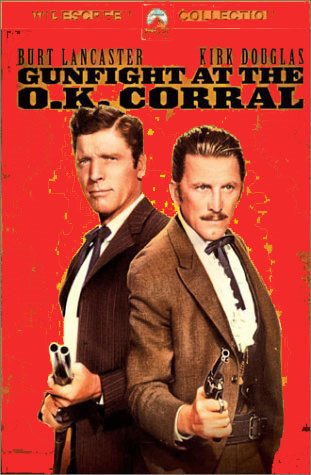
Gunfight at the J.L.S. Corral


Being a subscriber of the Journal of Libertarian Studies has its perks -- such as that you receive your hard copy before the e-book makes it to the interwebs. Due to error however, such is not the case, but yet I do not begrudge the non-subscribers the accidental treat of having access to the PDF before us subscribers got our first licks, and besides, "better that it be on the side of more information rather than less".

The JLS Winter 2006 edition is subtitled "SYMPOSIUM ON KEVIN CARSON'S STUDIES IN MUTUALIST POLITICAL ECONOMY" and features no less than seven articles.

I was so eagerly anticipating this issue, and it appears that it was certainly worth the wait (evaluating it using which ever method you devise to measure the value imbued through the disutility of waiting!)

For those of you who live in a bubble, Kevin Carson is either the DR. JEKYLL or MR. HYDE (or both, depending on whom you ask) behind mutualist.blogspot.com, a self-declared "free market anti-capitalist".

While I may disagree with the general attitude or conclusion of any of his particular blog posts, I still find it most enjoyable to studiously browse them; so if by any chance he reads this post, THANK YOU!

What I find that Mr. Carson brings to the table is serious, anti-statist critiques of existing political capitalism. Sometimes it's not enough to accept the status quo, and attribute its harshness, or seeming callousness to the free market -- as Mr. Carson likes to point out, the undesirable conditions may be in fact the result of existing, or even long-prior political-capitalism intervention.

At this point it's not difficult to disagree with Mr. Carson; after all, you may prefer to shop at Wal*Mart and other chain stores and personally dislike mom & pop operations. You may prefer to drive your gas guzzler even if you had to pick up the externalities tab. You may think that global warming is beneficial to humanity. You couldn't care less how much wealth other people have accumulated. In short, you would just be disagreeing whether the present arrangement of affairs is one which most people would choose to live under in the truly, unfettered free market in which they picked up all transaction costs.

The problem I find with Mr. Carson is his unwillingness to concede that there is some vague middle ground, a no-mans land so to speak, of which it's utterly impossible to divine what arrangements might actually prevail under the misty veil of the unknown free market ideal. I am even tempted to borrow the phraseology of the late Friedrich August Hayek, using what he termed "fatal conceit" to describe this willful egalitarianistic dream. [Not that I have anything against egalitarianism, other that I wouldn't want it imposed on me, and if people want to live under that principle, I wish them an 'equal' success.]

To me, attempting to calculate how many Wal*Marts would actually exist under free market conditions, is as fruitless as determining how many angels could dance on a pinhead. In Mr. Carson's idyllic free market, the wealthiest individuals would be as pebbles among sand, not boulders. And I would probably agree with his opinion, but the difference is that I won't conflate that with factual knowledge from which I would be comfortable dealing criticism.

For instance, Mr. Carson often alludes to the transportation subsidies (or "positive externalities" as P.M. Lawrence would say) which he alleges props up the inefficiencies of large-scale business operations at the expense of smaller mom & pops, and local artisans. On this basis, Wal*Mart and other international giants deserve a good, un-vulgar libertarians' scorn for taking advantage of the subsidy, and causing the disadvantaged firms and individuals to wither and suffer.

But how do we know that the positive externalities of the existent transportation system are not inferior to the free market ideal? I believe that we don't have such knowledge, and if one had to make a best guess, odds are that the political-capitalism variation of transportation costs more than would a free market system. However, one should at least concede the possibility of it being such.

Mr. Carson takes no such position, and as you will shorty see, nor does he adequately address the historical evidence which contests his claims of a free market unlikelyhood.

Not so long ago, on a thread titled "If It's Got a "Y" in It, It's Wal-Mart Day at Mises.Org", I wrote in response to an earlier commenter:
You bring up an interesting point. It's back to the old question of what is likely to occur under anarchy- cooperation or competition?

But you may find it interesting to note, that prior to government involvement in road building, there were hundreds of private road companies, just within New York state alone which were building private turnpikes left and right.

You may want to see Thomas DiLorenzo's "How Capitalism Saved America" which I read almost a year ago, so I don't exactly recall all the historical narrative that shows that private road building was possible without eminent domain. The explanation of how the cooperation occurred was that the landowners were offered a financial stake in the tolls, so that it wasn't much issue of acquiring land rights.

He also mentioned there, (contrary to what you mentioned) that the tolls fluctuated on the basis of tire width to vehicle weight, so that a heavy truck with wide wheels which generally smoothes out the road will pay less than vehicles with narrower tires which tend to rip ruts in the road.

His chapter on the North Pacific railroad also showed how a railroad company succeeded without huge land grants or subsidies and which privately funded their buyouts & buildouts.

Whether or not you buy Thomas DiLorenzo's argument, I still think it's a good enough question to make me hold back from criticizing transportation subsidies.
To which Mr. Carson kindly responded:
iceberg,

As Josh suggests, the profitability of shipping by truck depends in part on the fact that trucks are not currently taxed on the basis of their damage to the roadbeds. And while I don't doubt that it would be feasible to operate modest-sized highways on a free market basis, on preexisting rights of way, the lack of eminent domain would set severe limits on expanding their volume. Without ED, we'd probably have a network of 2-lane highways like those in the former USSR.

I haven't read Dilorenzo's book yet, so take this FWIW. But offering a high enough price to persuade every landowner, individually, to come on board would likely be considerably more expensive than the prices paid for condemned land under ED, and the resulting amortization costs would significantly raise the operating costs of the highway. In addition, the vulnerability of such arrangements to individual holdouts would raise all kinds of transaction costs.

Even we accept his assertion of this being an unlikely result in our modern day world, I would still leave the question open, since we don't know to what extent the demographical population density of today is the result of state capitalism. I'd also hazard that when roads were being built 100 years ago, vacant land, which would be considered available for road builder homesteading was certainly less scarce than it is today, and had those roads been built privately then, we would still be enjoying those goods today.

Alright, maybe so!