From an Austrian perspective, the notion of price gouging does not exist – the gasoline is the gas station owner’s property and he/she is under no obligation to sell it for any particular price, nor am I, as a consumer, obligated to buy... Even among those who agree in principle with market based pricing, the price gouging mentality has gained a foothold – even conservative radio talk show hosts have caught the disease.
The concept most people, seem to have most difficulty with is the replacement cost argument – the refinery or gas station bases it prices on what it expects to pay for its next delivery and not to recoup the cost of the last one. People understand that nobody will sell them 1000 shares of Google for 10% above last January’s price, or a Pacific Heights apartment for 20% above its 2000 price, and consider that this is perfectly reasonable.
Yet the same people expect a gas station owner, who paid $2.50 a gallon for the gas now selling at the pumps, to be morally bound (and in some states legally bound) to sell it for a “fair price”, $2.58 a gallon, even though the cost of the next shipment from the refinery will be $2.75 a gallon.
Monday, November 28, 2005
price gouging 101
While reading the Mises blog, I came across an excellent, although unsigned blog post, which tersely and yet effectively defuses the cries of "there ought to be a law"-types who think that coercion is the answer to everything, without realizing that coercion is usually the source of the problems to begin with. The one caveat I would attach is that the first argument is an ethical argument based on the premise of private property rights, and not based upon Austrian economics, but rather a libertarian philosophical grounding.


Sunday, November 27, 2005
propaganda redux
If you hadn't had enough dyspepsia last time; here have some more:
Let's see what we've got here--
Gross caricatures depicting the enemy as subhuman and implicating Americans who ignore wartime edicts as their cohorts...
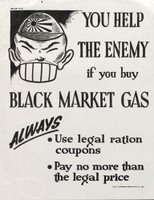
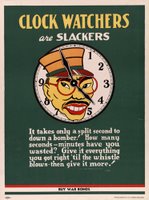
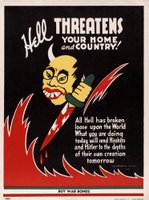

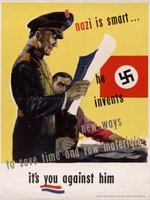
Equating downtime for recovery or leisure with active support of an enemy...
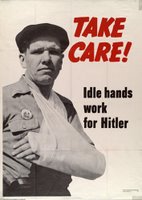

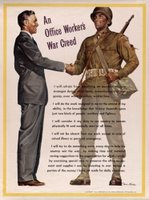
Denigration of those who choose to engage in peaceful, mutually-beneficial exchange as selfish, greedy, unjust lowlifes who help the enemy...
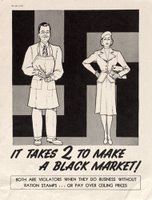
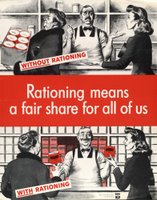
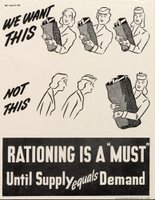
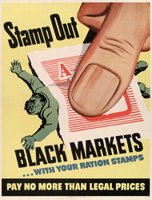
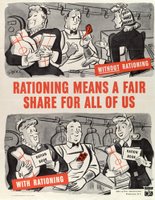
Discouraging people from maximizing their psychic value, by placing the needs of the war above the desires of individuals as indicated by their market preferences...

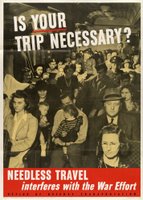
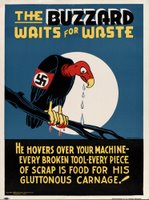


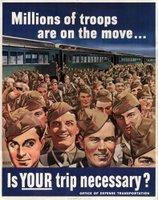
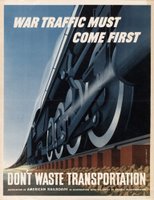
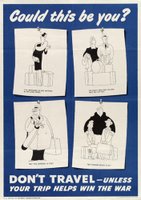
Silly, Norman-Rockwell Americans promoting a variety of harmful and inefficient government schemes...
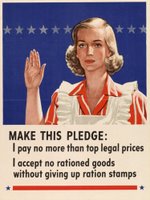
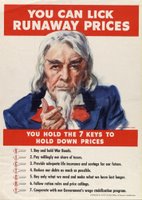
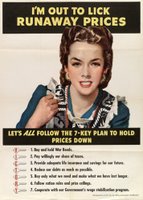
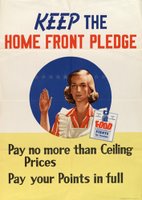
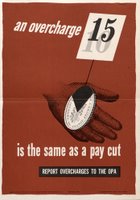
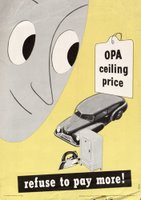
Slavery is freedom, free speech is dangerous, non-supporters of the authoritorian regime are going to have a german-speaking group of authoritarians take their place as if it makes a difference...

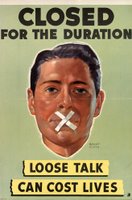

Let's see what we've got here--
Gross caricatures depicting the enemy as subhuman and implicating Americans who ignore wartime edicts as their cohorts...


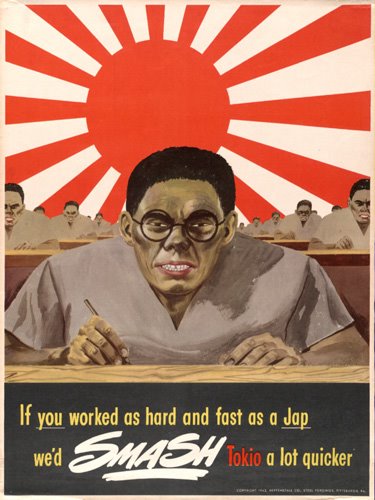

Check!
Equating downtime for recovery or leisure with active support of an enemy...
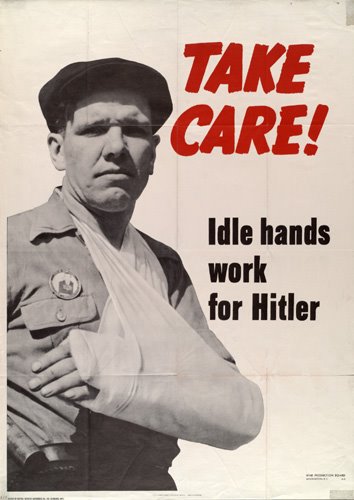
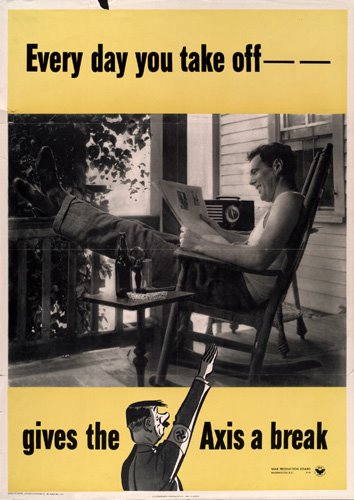

Check!
Denigration of those who choose to engage in peaceful, mutually-beneficial exchange as selfish, greedy, unjust lowlifes who help the enemy...

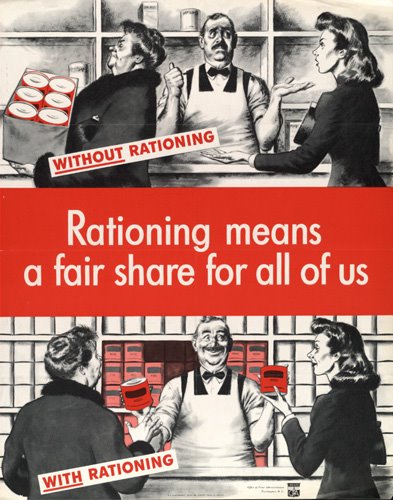

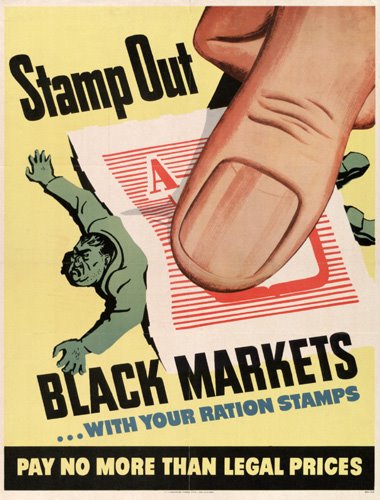
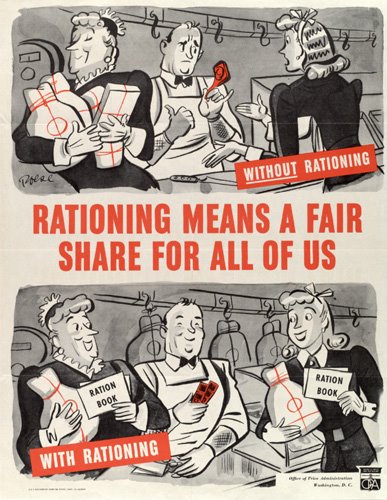
Check!
Discouraging people from maximizing their psychic value, by placing the needs of the war above the desires of individuals as indicated by their market preferences...


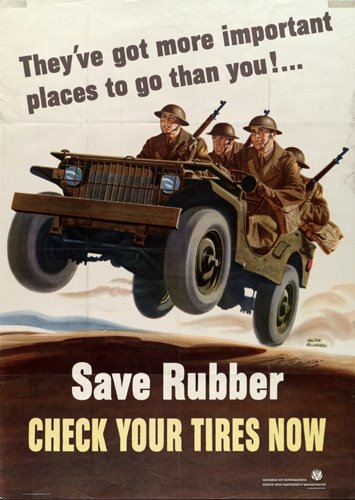
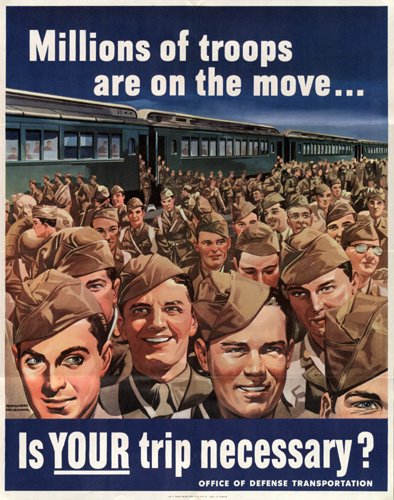

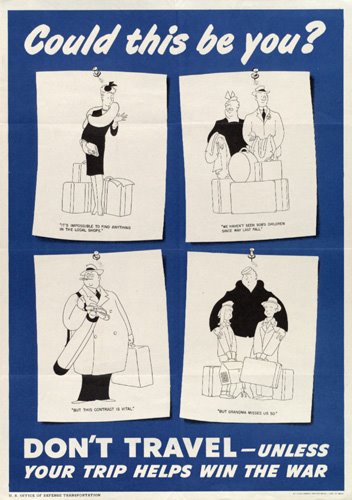
Check!
Silly, Norman-Rockwell Americans promoting a variety of harmful and inefficient government schemes...
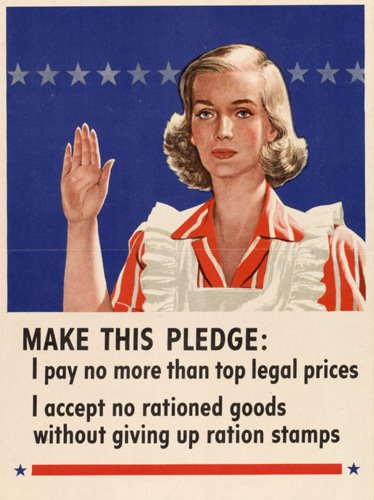


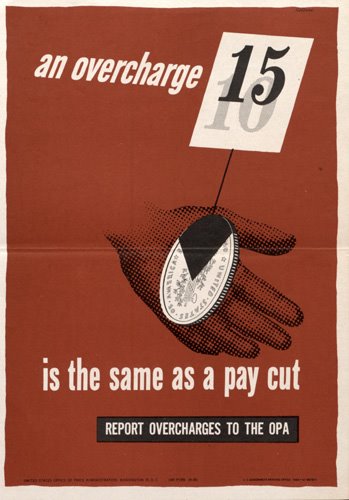
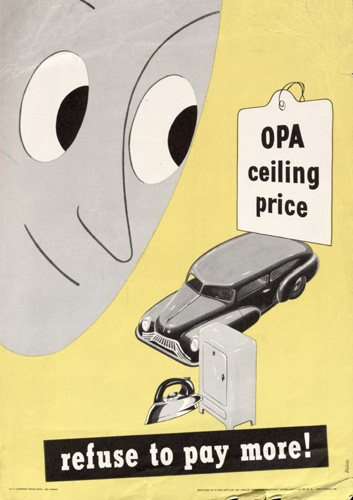
Check!
Slavery is freedom, free speech is dangerous, non-supporters of the authoritorian regime are going to have a german-speaking group of authoritarians take their place as if it makes a difference...

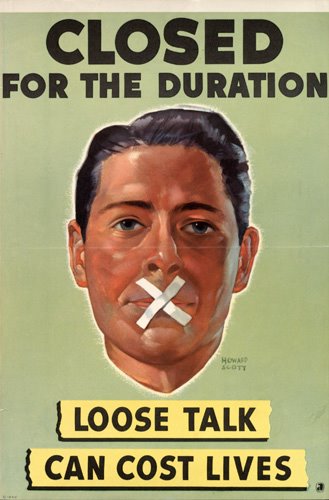

Check!
Wednesday, November 23, 2005
just a friendly reminder

To those of you out there for which the following is true-- you clap at the movie theatre. Although it may not be apparent, I regret to inform you that the actors who appear on your local cinema screen cannot see or hear you. So why the hell is there a signifigant number of you audience members clapping when you see the trailer for Star Wars or some other popular film? Would you do the same thing at home in front of your TV?
Tonight I had the pleasure of seeing the latest Harry Potter film at the Lowes Imax theatre on 68th and Broadway with my darling wife. When the Warner Brothers logo intro'd the film, nearly the entire audience roared with applause. Same thing when the film ended.
What for? I can understand people getting excited, but it's not like there is a receiving party at the other end which can enjoy approval and being appreciated for their effort.
Sports, shows, musicals, comedians, concerts, speeches and other live entertainment are all suitable venues for audience members to display their approval. I'm ambivalent regarding applause upon plane landings, though I can understand it since there are other representitives of the airline, such as the stewardesses, who can be the 'recipients' of the approval for the pilots landing skills.
So stop clapping at the movie theatre already!
Monday, November 21, 2005
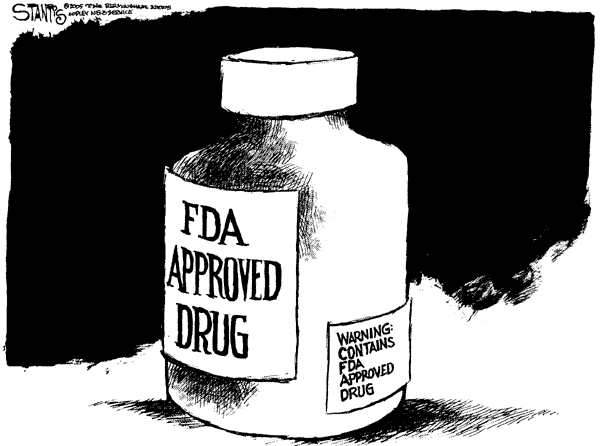
cafe hayek on the FDA
Continuing upon their 'abolish the FDA' theme, Cafe Hayek posts Bob Higgs' response to one of the earlier posts:
My favorite bit:
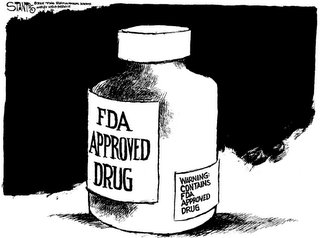
My favorite bit:
"The FDA is one of the greatest frauds ever perpetrated on the American people. It is a police agency, pure and simple, driven entirely by political motives, yet it constantly harps on, and gains public-relations mileage from, its scientific grounding. We need to keep telling as many people as we can get to listen that the FDA does not do what it claims to do."
Friday, November 18, 2005
complacency kills
I always stress this meme when explaining the unintended consequences of the even most benign-sounding legistlation. As Lisa Casanova said it some time ago on Catallarchy.net:
The idea behind it was to remove all the safety devices that drivers have come to take for granted and have lulled them into complacency; road stripes, speed signs, demarcated curbs, traffic lights, etc. This reintroduces the drivers to the reality of what their vehicle is truly capable of if mishandled. Drivers tend to drive slower and keep mindful of pedestrians who are walking just a few feet away and whom no longer enjoy the illusion of safety of an elevated curb. The removal of the road stripes makes drivers drive closer to the side than center of the road, because road stripes subconsciously allow them to drive "in their lane" instead of driving safer and closer to the side. The same goes for speed signs -- take them away and the drivers will gauge the risk of high-speed driving, instead of relying on road signs to give them a roundabout figure of the safety margin.
It even seems to encourage greater road cooperation:
If there ever was a great argument for anarchy, this is it.
The FDA should be totally shelved. No one should be in charge of keeping “marginally safe” drugs off the market, since there is really no such thing. There are no safe or unsafe drugs, only the tradeoff of risks and benefits that is unique to each individual making the choice to take the drug.There was also an article in Wired magazine, back in December 2004 which promoted the similar concept of road anarchy, in which 'The approach is radically counterintuitive: Build roads that seem dangerous, and they'll be safer.'
In a way, I think that abolishing the FDA might make big lawsuits less of a problem. Right now, people have this idea that drug safety is something they don’t need to concern themselves with, because someone else worries about it for them. They think someone is going to magically know alll the risks and benefits of a drug and tell them, “you can take this drug with zero worries. It’s nice and safe. Go ahead and pop that pill!”
Consumers of drugs get the idea that if the drug is on the market, that must be a sign that nothing bad can happen to them if they take it. If something bad does happen, someone must be to blame, since it was the job of somebody else to make sure the drug was safe, and nothing bad should happen to you if you take approved drugs, right?
Right now, people who take drugs that turn out to have serious risks have this attitude that someone let them down by not making sure that the drug they freely chose to take had no risks. Maybe people buying drugs on the market need to adopt more of a mindset of participants in a clinical trial, one of “I’m stepping into the unknown here. Is it worth it to me?”
If people knew that every time they take ANY drug, they are taking a risk (which is the way things really are), then maybe people would give lots more thought to drug safety than they do now, and outside of cases of companies committing fraud or hiding information about risks, it would be harder to blame someone else every time a drug turns out to have ill effects.
The idea behind it was to remove all the safety devices that drivers have come to take for granted and have lulled them into complacency; road stripes, speed signs, demarcated curbs, traffic lights, etc. This reintroduces the drivers to the reality of what their vehicle is truly capable of if mishandled. Drivers tend to drive slower and keep mindful of pedestrians who are walking just a few feet away and whom no longer enjoy the illusion of safety of an elevated curb. The removal of the road stripes makes drivers drive closer to the side than center of the road, because road stripes subconsciously allow them to drive "in their lane" instead of driving safer and closer to the side. The same goes for speed signs -- take them away and the drivers will gauge the risk of high-speed driving, instead of relying on road signs to give them a roundabout figure of the safety margin.
It even seems to encourage greater road cooperation:
Monderman and I stand in silence by the side of the road a few minutes, watching the stream of motorists, cyclists, and pedestrians make their way through the circle, a giant concrete mixing bowl of transport. Somehow it all works. The drivers slow to gauge the intentions of crossing bicyclists and walkers. Negotiations over right-of-way are made through fleeting eye contact. Remarkably, traffic moves smoothly around the circle with hardly a brake screeching, horn honking, or obscene gesture. "I love it!" Monderman says at last. "Pedestrians and cyclists used to avoid this place, but now, as you see, the cars look out for the cyclists, the cyclists look out for the pedestrians, and everyone looks out for each other. You can't expect traffic signs and street markings to encourage that sort of behavior. You have to build it into the design of the road."
If there ever was a great argument for anarchy, this is it.
Thursday, November 10, 2005
gadget of the week
My geekish tendencies have often left me impaired when it comes to all goods gadget, although thank goodness my self-control and good sense kick in and hence I rarely go ahead and splurge.
 The first gadget to thus grace this blog and which receives both the dubious honor of my insomnious attention AND my wife's utter despair is the Lightwedge LED booklight which is available in three sizes; original, paperback and mini.
This gadget is really a hit or miss item- reviewers on Amazon are either gung-ho about it, or deplore it. I've been using it for a couple of days now and I can understand what concerned the critics, but I enjoy it none the less.
The first gadget to thus grace this blog and which receives both the dubious honor of my insomnious attention AND my wife's utter despair is the Lightwedge LED booklight which is available in three sizes; original, paperback and mini.This gadget is really a hit or miss item- reviewers on Amazon are either gung-ho about it, or deplore it. I've been using it for a couple of days now and I can understand what concerned the critics, but I enjoy it none the less.
Wednesday, November 09, 2005
contextual stupidity
I've had it to here [motions with hand held perpendicular to neck] with the anti-development crowd in my great backyard of Brooklyn. Call me a crass, uber-vulgar libertarian if you'd like, but I'm sick and tired of playing the vertfrei [dilettante] economist who purports to walk the narrow line of disinterest when making observations about what happens when a landscape of contextual idiots decide to use the immoral power of government coercion to impose an irrational and meaningless "order" upon the spontaneous arrangement of housing and zoning.
So when I came home to read this pathetic rant, I was compelled to respond. (The excerpt blurbs from the rant are in red text)
I wrote:
So when I came home to read this pathetic rant, I was compelled to respond. (The excerpt blurbs from the rant are in red text)
I wrote:
Geez, "contextual development" is the dumbest non-sequitur invented by statists to date. My head is gonna go splody if someone says it again like it's self-explanatory, and somehow magically justifies government intervention to stop rightful property owners from making use of their property AS THEY SEE FIT.
"Developers, the majority of which do not live in the neighborhoods they prey upon"
You DON'T own your block/community, by the mere fact that you "live there", and it doesn't make a wad a difference if the developer is from intra-community or from Kalamazoo- what the hell does it matter where they reside? Community-ism, like Nationalism, is an irrational distinction where none should be made. Hence, you are not a higher-class member of a certain locale because your mothers' water broke in that district.
"nor stop their predominantly negative impact on the social, economic and architectural landscape of Brooklyn."
Nor Aaron or Mic seem to have a grasp of economics- for the simple reason that if the developers didn't think the market could bear the condo product, they wouldn't attempt to deliver it in the first place. And if ultimately the developers miscalculated and are wrong about it, the units will eventually clear at lower prices. So everyone wins. What the hell are they complaining about again?
Negative social and architectural impacts? First, how does one objectively determine what constitutes a "social cost", and secondly, architecture is a purely SUBJECTIVE discipline, hence there can be no legitimate comparison between styles in terms of "right" and "wrong".
"Our voices have been heard and the issues discussed ad nauseum, but is anyone really listening?"
A better question they should be asking themselves-- why do these punks think they're somehow entitled to decide how other people must deal with their property simply because they spoke up and made a stink of activism?
"Unholy development alliances have formed: Brooklyn mega-developer Isaac Katan teams with architect-of-ill-repute Henry Radusky of Bricolage Designs and demolition mogul Marie Grosso (MMG Designs). Real estate forecasters and consulting firm The Developers Group finds properties for “acquisition” in next year’s hot neighborhood, then links buyers with high-end architects and builders (how a produce purveyor can afford to build a Robert Scarano–designed five-story, 70-foot high, 35-unit luxury condo)."
I read this over carefully a few times, and I couldn't see how this is anything but progress. Used to be that if you wanted to build something you were all alone, and now the market has spontaneously arranged itself in a fashion which it can locate housing opportunities and link it up with all the appropriate people in a sort of production line in a factory. What do Aaron and Mic want, a return to the barter system?
"Such alliances are exploiting communities,"
Another stupid cliche and yet meaningless phrase- how does one exploit an aggregrate of homes?
"utilizing loop holes in zoning and the Department of Buildings (DOB) building codes"
That's great, and I encourage more of it. The DOB has no moral right to meddle in the first place- secondly it constitutes and unjust takings according to the U.S. Constitution's 5th amendment eminent domain clause when property owners are denied the fullest use of their properties according to you supporters of the 14th amendment's incorporation doctrine.
"working at a fast track pace that has created numerous dangerous job sites"
This sentence should continue as follows: "because developers who work hard and put a lot of money on the line are getting shafted by NIMBY statists who are quickly downzoning neighborhood after neighborhood". If it weren't for the recent rezonings, development would have likely continued at a safer, and slower pace.
"These violation-ridden sites not only jeopardize workers, adjacent properties and neighboring residents, but the community as a whole."
Workers, mind you, who CHOSE this dangerous line of work. You're not their grandmother, so stop pretending like you give a shit about their safety. Adjacent properties which suffer damages from improper construction should use the tort system to remedy their unfortunate situation, not some blanket zonings proposal which has diddly-squat to do with it. Communities as a whole!? Tell me, do you ever stop and think about what you wrote? This is as bad as your "exploiting communities" nonsense.
Monday, November 07, 2005
lack of a wisdom tooth makes me think harder
After having an impacted wisdom tooth extracted today, I want to go down on the record calling on future genealogists to screen out the genetic information which leads to the formation of these painful removables. Hopefully within a few generations the human race can erase this legacy.
Short of "gene therapy", which for the meanwhile I suppose is relegated strictly to the realm of science fiction, is the normal mode of procreation sufficient to ensure the offspring a less painful adulthood? Meaning, will it be necessary to have any genetic-screened pregnancy stem through an in vitro process or can it be accomplished au naturale?
Short of "gene therapy", which for the meanwhile I suppose is relegated strictly to the realm of science fiction, is the normal mode of procreation sufficient to ensure the offspring a less painful adulthood? Meaning, will it be necessary to have any genetic-screened pregnancy stem through an in vitro process or can it be accomplished au naturale?
Thursday, November 03, 2005
beyond comparison

While talking to your garden-variety statist, he will often dismiss your free-market proposals by pointing to a common situation and inadvertently make a direct comparison of the two.

Take FDA regulations:
"After all" he intones, "look at the Vioxx scandal -- if it weren't for the FDA regulating medicine, people would be dropping dead of heart attacks all over the place."
Or housing:
"If it weren't for the regulations, landlords wouldn't care about their tenants; apartments would be in worse repair than today; senior citizens would be frozen stiff in their unheated rent-controlled apartments; rats and all other vermin would no longer be the unwanted guests, but be elevated to permanent resident status; et. al."
Or banking:
"If it weren't for the FDIC, banks would collapse all over the place, and hundreds of hard-working people would lose their savings, their homes, etc." [editor: He might specify "AMERICANS" instead of the generic term "people" at this point to curry nationalistic brown-nosed debate points]
Or utilities:
"Look what happened when they deregulated the energy industry- the 2004 blackout in the northeast, the Enron scandal, etc."
Of course, at this point we could all just take one step back, and attempt to show how all of these problems (taking for granted that these are even problems!) are just the symptoms of an earlier government intervention, but again, at this point you have probably -
A) lost interest by either party to continue said discussion
or
B) have rambled off into half-a-dozen supporting arguments, which at that point the auto-statist conditioning has already rebooted the interlocutor's brain software to forget your earlier points, and to begin hitting you with questions you have already effectively dealt with.
I tend to be amazed of how these conversations just keep on revolving around and around [editor: redundant???] and don't ever make progress, and so one invariably heads back to option A in polite company, or the missing option F$@#! when quite heated with conversational fervor.
The main problem here is that the statist-conditioned has difficulty with conceptualization of ideas free of the present regulated condition. He will therefore compare any free market proposal to that of the regulated state, no matter how many times you insist that any so-called "deregulation" is a misnomer, and at best exists within the matrix of the regulated state and thus subject to the unintended consequences onset by Leviathan's meddling.

That off my chest, I would like to recommend a two articles series (first, second) by Stefan Molyneux, the second which grapples with the topic of this blog post. To quote a nice portion of it, and highlight what I consider the most salient point:
A basic fact of life is that people respond to incentives. The better that crime pays, the more people will become criminals. Certain well-known habits – drugs, gambling, prostitution in particular – are non-violent in nature, but highly desired by certain segments of the population. If these non-violent behaviours are criminalized, the profit gained by providing these services rises. Illegality destroys all stabilizing social forces (contracts, open activity, knowledge sharing and mediation), and so violence becomes the norm for dispute resolution.
Furthermore, wherever a legal situation exists where most criminals make more money than the police, the police are simply bribed into compliance. Thus by increasing the profits of non-violent activities, the State ensures the corruption of the police and judicial system – thus making it both safer and more profitable to operate outside the law! It can take dozens of arrests to actually face trial – and many trials to gain convictions. Policemen now spend about a third of their time filling out paperwork – and 90% of their time chasing non-violent criminals. Entire sections of certain cities are run by gangs of thugs, and the jails are overflowing with harmless low-level peons sent to jail as make-work for the judicial system – thus constantly increasing law-enforcement budgets. Peaceful citizens are legally disarmed through gun control laws. In this manner, the modern State literally creates, protects and profits from violent criminals.
Thus the standard to compare the stateless society’s response to violent crime is not some perfect world where thugs are effectively dealt with, but rather the current mess where violence is both encouraged and protected.
Before we turn to how a stateless society deals with crime, however, it is essential to remember that the stateless society automatically eliminates the greatest violence faced by almost all of us – the State that threatens us with guns if we don’t hand over our money – and our lives, should it decide to declare war. Thus it cannot be said that the existing system is one which minimizes violence. Quite the contrary – the honest population is violently enslaved by the State, and the dishonest provided with cash incentives and protection...
If anyone was wondering, and before I forget-- there is no editor; that is just the other me who likes to over-comment, but can't figure how to do it glibly.
Sunday, October 30, 2005
keep fast
 Avid reader of Robin Hobb's earlier Farseer, Liveship Traders, and the Tawny Man trilogies will be certain to enjoy her latest Soldier's Son trilogy which begins with a "coming of age" book titled Shaman's Crossing.
The setting for this tale is an exiled empire called Gernia, which had lost its most precious coastal lands, and was forced to battle its way inland to territory already occupied by uncivilized tribes, collectively known as the 'plains people'.
The main character Nevare Burvelle is the son of a newly-appointed lord and is destined to become a soldier as was his father before the king rewarded him with lordship for his valor in combat. The story begins with couple of chapters summing up the important events of Nevare's childhood, but remaining in the present tense throughout.
The "coming of age" section, the meat of this tale, is when Nevare heads off to military academy, to hopefully become a mounted officer, part of the "cavalla" like his father before him. Nevare, a soldier's son, raised as a soldier to always obey, must now learn how to juggle between obedience and leadership, qualities which are often contradictory.
Without divulging any further plot material, this book has an ending to the compare of the Tolkien's 'scouring of the shire' in terms of Nevare's personality change and how he deals with the people around him.
What I enjoy in Robin Hobb's tales is her obvious talent in painting her characters with genuine personas, not unrealistic, quivering, and overdone moralists-- something which I believe is quite rare in the fantasy genre.
I have a vague notion of where Ms. Hobb intends on taking this series, and I believe it will be with a reexamination of the sad plight of the plains people, and the double-standard of Gernia; on one hand it proclaims its moral right to reclaim their ancestral lands, but at the same time it callously took another people's lands and disregarded their rights by proclaiming the indigenous people to be savages who must be brutally reformed into the civilization provided by Gernia.
My rating for this novel is 4.5 stars out of 5.
Thursday, October 27, 2005
freeloading Amazon images
If you would just take a quick look down the sidebar, you will notice that I have added the cover artwork for each of the books I have listed. Being that I'm too lazy to scan in the covers myself, I went to 'teh interweb' in search of quality photos to link to with a "img src=" hyperlink.
Well who else but Amazon.com, right? Well not exactly!
Amazon seems to discourage freeloading of their images by placing obtrusive "Search Inside this Book" arrows or watermarking them with "COPYRIGHT MATERIAL" so that freeloaders like me won't link directly to the image, or even rehost the image file since they appear with defacement gratis.
Well, after playing around with their hyperlink code, it appears that I found the right combo which displays the image I need in the right size for my page.
Here is an example:
<img src="http://images.amazon.com/images/P/XXXXXXXXXX.01._SCMZZZZZZZ_.jpg" />
The first part in blue characters should not be changed. The part in red must be replaced with the ASIN of the Amazon item you are linking to, which should be a 10-character string (the ASIN of a particular item can be found by looking at that items page on Amazon.com.)
As I finished writing about thisexploit neat trick, I found a webpage titled "Abusing Amazon Images" which goes in detail into how you can manipulate the Amazon.com server to give you images in different sizes, with discount rates applied, and all other sorts of goodies Amazon.com rather you not know about.
To repeat what the author of that page said -- don't be an ungracious leech; if you're going to link to their hosted images, at least link to the sales page so that Amazon can make a buck off of it.
Well who else but Amazon.com, right? Well not exactly!
Amazon seems to discourage freeloading of their images by placing obtrusive "Search Inside this Book" arrows or watermarking them with "COPYRIGHT MATERIAL" so that freeloaders like me won't link directly to the image, or even rehost the image file since they appear with defacement gratis.
Well, after playing around with their hyperlink code, it appears that I found the right combo which displays the image I need in the right size for my page.
Here is an example:
<img src="http://images.amazon.com/images/P/XXXXXXXXXX.01._SCMZZZZZZZ_.jpg" />
The first part in blue characters should not be changed. The part in red must be replaced with the ASIN of the Amazon item you are linking to, which should be a 10-character string (the ASIN of a particular item can be found by looking at that items page on Amazon.com.)
As I finished writing about this
To repeat what the author of that page said -- don't be an ungracious leech; if you're going to link to their hosted images, at least link to the sales page so that Amazon can make a buck off of it.
Wednesday, October 19, 2005
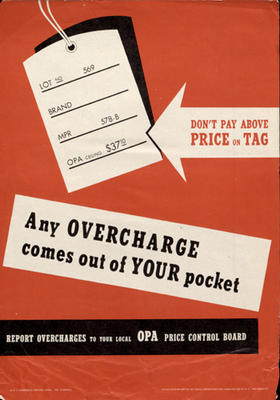
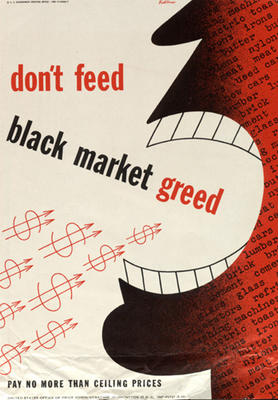
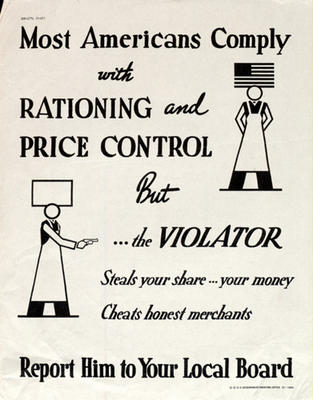
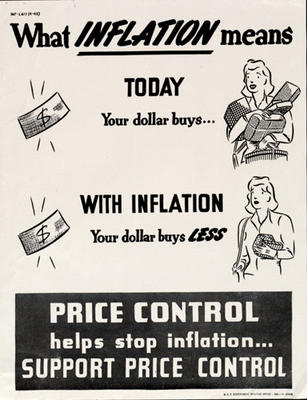
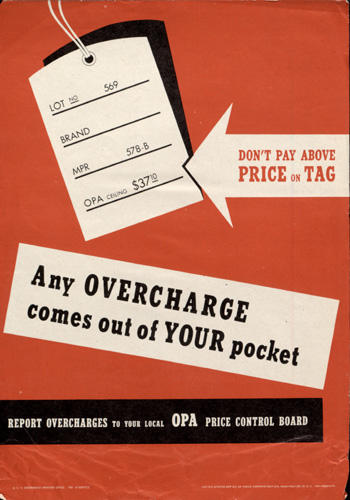
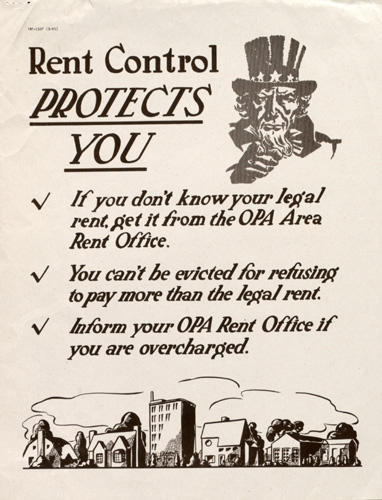
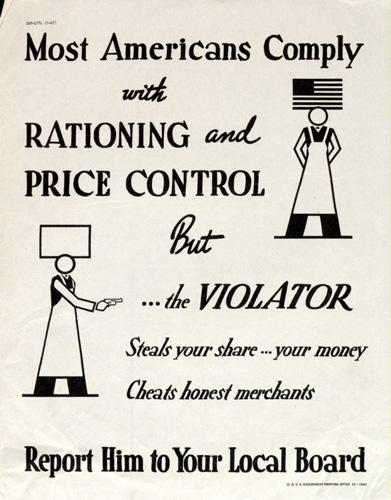
Speechless
I really don't have the words to express the way these outdated propaganda posters make me feel. I'm just really glad that this overt bout of insanity ended way before I was born. Not that the policies which scream economic-ignorance and individual-rights-trampling don't remain today; in fact I think the reason we don't see such posters anymore is due to the excellent schooling (note: I did not say "education") that we enjoy/suffer in this country, which no doubt played a major role in making propaganda totally unnecessary in our modern, statist-conditioned population.



Sunday, October 16, 2005
This is Why I Despise Politics
Politics is the opiate of the masses which is no more important than other day-after water-cooler topics such as sports, celebrity lives, and the happenings on the latest TV show.
Politics is about stirring up emotions, and encouraging people to take an active stance on different issues. So perhaps the most dangerous aspect of politics is that it fosters the dangerous human conditioning that any perceived problem automatically justifies an action of some sort to effect a perceived solution.
For example, one local rabbi was the topic of a recent family conversation. A family member complained how this rabbi has no regard for his congregants time, and is oft to spontaneously launch into long-winded sermons between services, during which some congregants nervously glance at their watches.
The rabbi brazenly justifies his take-all-prisoners approach; he announces that a little Jewish education would be time better spent than just lazing around in one's home. Recently, he made an announcement during Yom Kippur prayer services, that a time-sensitive* prayer called Ne'ilah could "wait a while" until he was done speaking. Not only did they miss the correct time for the prayers, this particular congregation finished what is supposed to be a 24-hour fast over an hour later than most synagogues. Perhaps the fasting condition exacerbated this annoyance, but regardless it was certainly inconsiderate of the rabbi to keep them waiting.
Now while I certainly can feel sorry for these congregants, I can not bring myself to condemn the rabbi or join others making demands that he apologize, or some other remedy of the like. The reason for my non-stance is because this rabbi owns and controls this synagogue, and that those who attend do so upon his rules and conditions, however repugnant you may find it. Of course I may bear some personal dislike for his egregious slights, but like opinion holding, that's all I am entitled to.
However, the politically active members of society (who may pride themselves on this wonderful "virtue") are typically the ones who immediately call for heads to roll, or solutions to be enacted. Therein lies the danger of the politico -- he unquestionably assumes that something ought be done, consequences or the trampled individual rights be damned (sometimes without even considering either!)
The politician is also at fault to mistake the outcome desired by those who hold opposing viewpoints. For instance, one can choose to oppose public education, but that does not mean that he opposes the outcome of education, only the state running or funding thereof- and his means might consist of a totally private proposal, a voucher initiative, etc.
This lesson is apparently wasted upon people who produce T-shirts like these:

The faulty assumption is that those who oppose initiatives called "universal healthcare" or "affordable housing" oppose the desired outcomes. While that might even be the case, it is more like that the opponents of those initiatives also desire those outcomes but disagree on the specific means to this end. If they're anarchists of the libertarian bent, they will certainly object to the means being employed (even if it successfully brings about the ends!) since the ends can never justify the means.

The anarchocapitalist/libertarian/voluntarism solution is usually the same in any situation that I can imagine; the respect for the sanctity of property. Example after countless example, the results of this one golden rule will yield the equitable outcome politicians promise but are unable to deliver (or won't for concern of their job security.)
Murray Rothbard's treatment of "Yelling Fire in a Crowded Theatre" is an example par excellence of the golden rule delivering the desired outcome without the obliteration of individual or property rights.
------------
*The prayer service called Ne'ilah is performed only once a year on Yom Kippur, and literally means "closing", referring to the gates of heaven being closed so that no further atonement prayers will be accepted that day. Traditionally, the time of this closing is at sunset, so congregations take special care to pray this service before then.
Politics is about stirring up emotions, and encouraging people to take an active stance on different issues. So perhaps the most dangerous aspect of politics is that it fosters the dangerous human conditioning that any perceived problem automatically justifies an action of some sort to effect a perceived solution.
For example, one local rabbi was the topic of a recent family conversation. A family member complained how this rabbi has no regard for his congregants time, and is oft to spontaneously launch into long-winded sermons between services, during which some congregants nervously glance at their watches.
The rabbi brazenly justifies his take-all-prisoners approach; he announces that a little Jewish education would be time better spent than just lazing around in one's home. Recently, he made an announcement during Yom Kippur prayer services, that a time-sensitive* prayer called Ne'ilah could "wait a while" until he was done speaking. Not only did they miss the correct time for the prayers, this particular congregation finished what is supposed to be a 24-hour fast over an hour later than most synagogues. Perhaps the fasting condition exacerbated this annoyance, but regardless it was certainly inconsiderate of the rabbi to keep them waiting.
Now while I certainly can feel sorry for these congregants, I can not bring myself to condemn the rabbi or join others making demands that he apologize, or some other remedy of the like. The reason for my non-stance is because this rabbi owns and controls this synagogue, and that those who attend do so upon his rules and conditions, however repugnant you may find it. Of course I may bear some personal dislike for his egregious slights, but like opinion holding, that's all I am entitled to.
However, the politically active members of society (who may pride themselves on this wonderful "virtue") are typically the ones who immediately call for heads to roll, or solutions to be enacted. Therein lies the danger of the politico -- he unquestionably assumes that something ought be done, consequences or the trampled individual rights be damned (sometimes without even considering either!)
The politician is also at fault to mistake the outcome desired by those who hold opposing viewpoints. For instance, one can choose to oppose public education, but that does not mean that he opposes the outcome of education, only the state running or funding thereof- and his means might consist of a totally private proposal, a voucher initiative, etc.
This lesson is apparently wasted upon people who produce T-shirts like these:
The faulty assumption is that those who oppose initiatives called "universal healthcare" or "affordable housing" oppose the desired outcomes. While that might even be the case, it is more like that the opponents of those initiatives also desire those outcomes but disagree on the specific means to this end. If they're anarchists of the libertarian bent, they will certainly object to the means being employed (even if it successfully brings about the ends!) since the ends can never justify the means.
The anarchocapitalist/libertarian/voluntarism solution is usually the same in any situation that I can imagine; the respect for the sanctity of property. Example after countless example, the results of this one golden rule will yield the equitable outcome politicians promise but are unable to deliver (or won't for concern of their job security.)
Murray Rothbard's treatment of "Yelling Fire in a Crowded Theatre" is an example par excellence of the golden rule delivering the desired outcome without the obliteration of individual or property rights.
------------
*The prayer service called Ne'ilah is performed only once a year on Yom Kippur, and literally means "closing", referring to the gates of heaven being closed so that no further atonement prayers will be accepted that day. Traditionally, the time of this closing is at sunset, so congregations take special care to pray this service before then.
Friday, October 14, 2005
I'm Not on Wal*Mart's Payroll...
and yet that doesn't make me a "useful idiot" either.
Recently, the NYC city council has passed a bill (overriding the veto efforts of Mayor Mike Bloomberg) to require businesses with large footprints to contribute towards the health care costs of it's employees. This ploy was for the purpose of keeping one low-priced, international store chain called Wal*Mart from opening a store in any of New York City's boroughs. Even one of the lone dissenting votes admitted that he would vote for it, if only the law excluded a few of the businesses located in his district which were the unintended and unfortunate targets of this new legislation. (read more here: "The Higher-Priced Groceries Act", "City Council, in Veto Override, to Block Wal-mart" and "New Questions Arise on Bill on Wal-mart".)
If on principle I reject the legitimacy of government to determine which retailers are allowed to locate how, where and when, how does this ever translate into a "pro" Wal*Mart position?
As an anarchist, I condemn any group or individual from coercively intervening to prevent or stop an individual from performing an action which causes no direct or indirect physical harm to befall a second party and/or their property.
As an aspiring economist, I will even deny the legitimacy of the claims of those who say bigbox retailers are bad for the economy, bad for jobs, uses the state to subsidize their healthcare, worsens the "local economy" by exporting money, etc. and will argue that these claims are either completely baseless or at least dispute the question of its utility (which determines the "badness" according to the proponents of said arguments.)
Furthermore I will state that policies enacted upon "wishful-thinking economics" will only hurt consumers (shortages, higher-prices, long lines, etc.) and prolong inefficient business investment, and which will result in a more spectacular job-market or local economic collapse when these businesses ultimately fail.
I found myself chuckling yesterday over a poster seen at a local senior citizen's center. It was promoting the innocuously-titled "Farmer's Market Nutrition Program" where underneath it stated to bring your WIC stamps to the Farmers Market to support the local growers of unprocessed fruits and vegetables.
This the perfect example of the federal and its corresponding state-level government agency intervening to prop up a most-likely inefficient local economy (namely the production of fresh produce in an urban neighborhood) which involves multiple wealth redistributions just to realize.
First, the government must allocate space to set up the market, and yet they don't charge access fees like they would for any private use of that resource. Second, they urge those who are net tax receivers to spend their freely-obtained WIC stamps at these locations, which bears
a) the cost of the Farmer's Market promotional material
b) the overhead of the bureaucracy which produced and distributed the material and runs the program,
c) the cost of the WIC stamps face value, even if discounted,
d) the overhead costs of running the WIC agency for running the programs,
e) the overhead of the tax collection agencies (local, state and federal) which need to collect the funds to do all of the above!
In all likelihood, the local economy would be better, and more efficiently served if the participants were simply handed a handsome and generous check which paid them ten times the price of their products and just called it a day. However, this leads right into my next point.
Instead of economizing the taxpayer's funds with a direct wealth transfer, the government opts to cover up an indirect welfare transfer under a colorful banner of economic-illiterate yet local-friendly garb. Anyone who thus attacks the wealth transfer is than labeled as one who is anti-small business, or one "who doesn't want to support his local economy".
There is absolutely nothing wrong with [voluntary] supporting your local economy; it's only naive to think that an artificial support supplied by multiple wealth transfers of inefficient government agencies will successfully accomplish what the free market will not bear.
The participants in this grand scheme are thus kept working in less-than-gainful employment, for goods better supplied from elsewhere. Even if they truly were more efficient at producing and supplying these goods, there is still the question of whether the locality enjoys a comparative advantage of having the goods produced elsewhere so that the local resources are utilized in professions and tasks which are more valuable.
The one thing that bothers me most is having to defend my "pro" Wal*Mart position with economics, and not simply denying the validity of those who wish to intervene in the first place. Why is that the ethical argument is always less appealing than the utilitarian (economic) approach?
One thinks that this is because of the unquestioned legitimacy of the state, which in the minds of its dupes enjoys the right to shoot first, ask questions later; so that it may impose bodily or financial harm to individuals, the costs of which to be judged at another time, when the recipients of the wealth transfer can then vote for the politician who promises not to take the wealth transfer away (i.e.- see rent control).
Recently, the NYC city council has passed a bill (overriding the veto efforts of Mayor Mike Bloomberg) to require businesses with large footprints to contribute towards the health care costs of it's employees. This ploy was for the purpose of keeping one low-priced, international store chain called Wal*Mart from opening a store in any of New York City's boroughs. Even one of the lone dissenting votes admitted that he would vote for it, if only the law excluded a few of the businesses located in his district which were the unintended and unfortunate targets of this new legislation. (read more here: "The Higher-Priced Groceries Act", "City Council, in Veto Override, to Block Wal-mart" and "New Questions Arise on Bill on Wal-mart".)
If on principle I reject the legitimacy of government to determine which retailers are allowed to locate how, where and when, how does this ever translate into a "pro" Wal*Mart position?
As an anarchist, I condemn any group or individual from coercively intervening to prevent or stop an individual from performing an action which causes no direct or indirect physical harm to befall a second party and/or their property.
As an aspiring economist, I will even deny the legitimacy of the claims of those who say bigbox retailers are bad for the economy, bad for jobs, uses the state to subsidize their healthcare, worsens the "local economy" by exporting money, etc. and will argue that these claims are either completely baseless or at least dispute the question of its utility (which determines the "badness" according to the proponents of said arguments.)
Furthermore I will state that policies enacted upon "wishful-thinking economics" will only hurt consumers (shortages, higher-prices, long lines, etc.) and prolong inefficient business investment, and which will result in a more spectacular job-market or local economic collapse when these businesses ultimately fail.
I found myself chuckling yesterday over a poster seen at a local senior citizen's center. It was promoting the innocuously-titled "Farmer's Market Nutrition Program" where underneath it stated to bring your WIC stamps to the Farmers Market to support the local growers of unprocessed fruits and vegetables.
This the perfect example of the federal and its corresponding state-level government agency intervening to prop up a most-likely inefficient local economy (namely the production of fresh produce in an urban neighborhood) which involves multiple wealth redistributions just to realize.
First, the government must allocate space to set up the market, and yet they don't charge access fees like they would for any private use of that resource. Second, they urge those who are net tax receivers to spend their freely-obtained WIC stamps at these locations, which bears
a) the cost of the Farmer's Market promotional material
b) the overhead of the bureaucracy which produced and distributed the material and runs the program,
c) the cost of the WIC stamps face value, even if discounted,
d) the overhead costs of running the WIC agency for running the programs,
e) the overhead of the tax collection agencies (local, state and federal) which need to collect the funds to do all of the above!
In all likelihood, the local economy would be better, and more efficiently served if the participants were simply handed a handsome and generous check which paid them ten times the price of their products and just called it a day. However, this leads right into my next point.
Instead of economizing the taxpayer's funds with a direct wealth transfer, the government opts to cover up an indirect welfare transfer under a colorful banner of economic-illiterate yet local-friendly garb. Anyone who thus attacks the wealth transfer is than labeled as one who is anti-small business, or one "who doesn't want to support his local economy".
There is absolutely nothing wrong with [voluntary] supporting your local economy; it's only naive to think that an artificial support supplied by multiple wealth transfers of inefficient government agencies will successfully accomplish what the free market will not bear.
The participants in this grand scheme are thus kept working in less-than-gainful employment, for goods better supplied from elsewhere. Even if they truly were more efficient at producing and supplying these goods, there is still the question of whether the locality enjoys a comparative advantage of having the goods produced elsewhere so that the local resources are utilized in professions and tasks which are more valuable.
The one thing that bothers me most is having to defend my "pro" Wal*Mart position with economics, and not simply denying the validity of those who wish to intervene in the first place. Why is that the ethical argument is always less appealing than the utilitarian (economic) approach?
One thinks that this is because of the unquestioned legitimacy of the state, which in the minds of its dupes enjoys the right to shoot first, ask questions later; so that it may impose bodily or financial harm to individuals, the costs of which to be judged at another time, when the recipients of the wealth transfer can then vote for the politician who promises not to take the wealth transfer away (i.e.- see rent control).
Tuesday, October 11, 2005
Viva Las Vegas
In January of this year, my wife and I vacationed in Las Vegas and subsequently in California. This blog entry deals with the Las Vegas leg of our trip, being that I was deeply moved and inspired by the anecdotal experience of a relatively free market in action.
When in Vegas, do as the Vegasians do. So I gaped at all the right sights, took dozens of digital snapshots as a proper tourist is obliged; however all the sensory-induced astonishment I was subject to was easily outmatched by the curiosity to understand what makes this insomnious city tick.
As a minor sidetrack, I was dismayed to learn that Las Vegas's pomp is veneer, although now in hindsight I understand that it doesn't make sense to have it otherwise.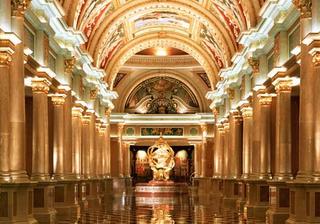
For example, the Venetian hotel's lobby and the underside of its enormous outdoor awning bear Sistine Chapel-like frescos which made me catch my breath in amazement. This level of ostentation is expected from hotels which cost billions of dollars, no?
However after my protracted scrutiny, I observed that all was but a masterful application of printed wallpaper, not the skilled work of supine artisans.
If one already knew this instinctively, I beg your pardons, as I am not even remotely expert in matters pertaining to art, paintings, Michaelangelo's magnum opus, painting techniques and methodology, et cetera. What I found which destroyed this illusion was the very subtle lines where the wallpapers joined. In some places, I even found the wallpaper edges begining to curl, although minimally.
Henceforth for the duration of our visit, the cynical voice within me spoiled all the delicious eye candy I once basked in on a previous visit to this newly-realized "pretentious" city. Plaster or marble objects such as columns and busts suffered my quidnuncous hand-knocking to gauge their hollowness or composition.
Despite all these "shortcomings", I was still impressed by the economic miracle that Las Vegas appears to be. It's obvious that major capital investment has been made in this desert rose. And it's also fairly obvious how this once deserted nowhere became the gaming, tradeshow, shopping andadult entertainment mecca of the secular world.
According to common lore, Benjamin "Bugsy" Seigalbaum, a tier-one member of Murder, Inc. had the crazy idea of expanding Mayer Lansky and Salvatore Charles "Lucky" Luciano's gambling and racketeering empire to the west coast. It didn't hurt that the Nevada state had recently legalized gambling in 1931, and that prostitution is not illegal in Nevada counties with less than 400,000 occupants.
In a unincorporated county known as Paradise which bordered Las Vegas, he took over a failed hotel project with mob money and built the Flamingo hotel, reputedly for the reknown oral skills of his favorite mistress Virginia Hill (it's all in her testimony to the IRS -- gosh, don't you love Wikipedia??)
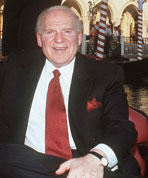
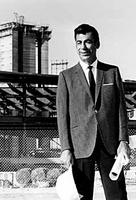
Combine one part of the following Kirk Kerkorian, the Hilton corporation (Bally, Ceasar's, and now Harrah's), Sheldon Adelson, Steve Wynn and you have the modern-day strip in Las Vegas.
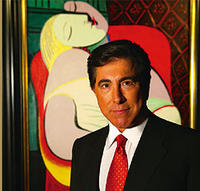
What this all demonstrates is that capital has the nature of water, in the sense that liquid will always flow to the lowest place of its container. Likewise, [the owners of] capital will seek the lowest-regulated enviroment for its investment, as individuals in such places are more free to spend, gamble and invest their savings in the fashion they choose.
However, I think that Las Vegas is not exactly the example one wants to use to demonstrate the potential of a free market. In truth, it's perhaps the opposite. The modern Las Vegas owes itself not a free market, but because the external conditions were unfavorable towards investment. If gambling and prostitution were unregulated everywhere, its doubtful that anything like Las Vegas would arise in the free market, and instead smaller pockets of popular gambling locations would be numerous and uncountable, unlike today.
Yes, a free market might or would provide extraordinary gambling destinations, but I think that Las Vegas is the effect of unnatural accumulation of capital due to federal-recognized tribal monopolies.
-----------
For an interesting and short lecture on Las Vegas, William Wieder delivered A Misesian Perspective on Las Vegas (right-click link to download)
When in Vegas, do as the Vegasians do. So I gaped at all the right sights, took dozens of digital snapshots as a proper tourist is obliged; however all the sensory-induced astonishment I was subject to was easily outmatched by the curiosity to understand what makes this insomnious city tick.
As a minor sidetrack, I was dismayed to learn that Las Vegas's pomp is veneer, although now in hindsight I understand that it doesn't make sense to have it otherwise.
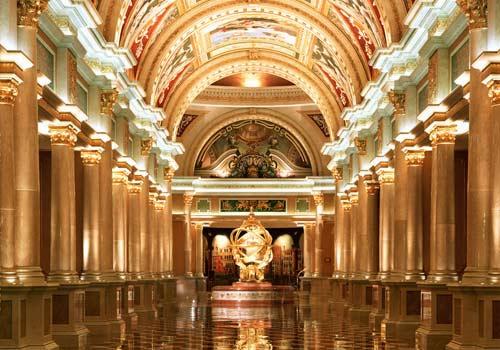
For example, the Venetian hotel's lobby and the underside of its enormous outdoor awning bear Sistine Chapel-like frescos which made me catch my breath in amazement. This level of ostentation is expected from hotels which cost billions of dollars, no?
However after my protracted scrutiny, I observed that all was but a masterful application of printed wallpaper, not the skilled work of supine artisans.
If one already knew this instinctively, I beg your pardons, as I am not even remotely expert in matters pertaining to art, paintings, Michaelangelo's magnum opus, painting techniques and methodology, et cetera. What I found which destroyed this illusion was the very subtle lines where the wallpapers joined. In some places, I even found the wallpaper edges begining to curl, although minimally.
Henceforth for the duration of our visit, the cynical voice within me spoiled all the delicious eye candy I once basked in on a previous visit to this newly-realized "pretentious" city. Plaster or marble objects such as columns and busts suffered my quidnuncous hand-knocking to gauge their hollowness or composition.
Despite all these "shortcomings", I was still impressed by the economic miracle that Las Vegas appears to be. It's obvious that major capital investment has been made in this desert rose. And it's also fairly obvious how this once deserted nowhere became the gaming, tradeshow, shopping and
According to common lore, Benjamin "Bugsy" Seigalbaum, a tier-one member of Murder, Inc. had the crazy idea of expanding Mayer Lansky and Salvatore Charles "Lucky" Luciano's gambling and racketeering empire to the west coast. It didn't hurt that the Nevada state had recently legalized gambling in 1931, and that prostitution is not illegal in Nevada counties with less than 400,000 occupants.
In a unincorporated county known as Paradise which bordered Las Vegas, he took over a failed hotel project with mob money and built the Flamingo hotel, reputedly for the reknown oral skills of his favorite mistress Virginia Hill (it's all in her testimony to the IRS -- gosh, don't you love Wikipedia??)
Combine one part of the following Kirk Kerkorian, the Hilton corporation (Bally, Ceasar's, and now Harrah's), Sheldon Adelson, Steve Wynn and you have the modern-day strip in Las Vegas.
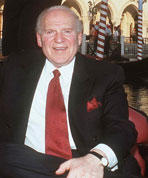

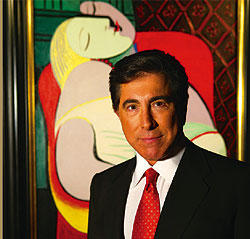
What this all demonstrates is that capital has the nature of water, in the sense that liquid will always flow to the lowest place of its container. Likewise, [the owners of] capital will seek the lowest-regulated enviroment for its investment, as individuals in such places are more free to spend, gamble and invest their savings in the fashion they choose.
However, I think that Las Vegas is not exactly the example one wants to use to demonstrate the potential of a free market. In truth, it's perhaps the opposite. The modern Las Vegas owes itself not a free market, but because the external conditions were unfavorable towards investment. If gambling and prostitution were unregulated everywhere, its doubtful that anything like Las Vegas would arise in the free market, and instead smaller pockets of popular gambling locations would be numerous and uncountable, unlike today.
Yes, a free market might or would provide extraordinary gambling destinations, but I think that Las Vegas is the effect of unnatural accumulation of capital due to federal-recognized tribal monopolies.
-----------
For an interesting and short lecture on Las Vegas, William Wieder delivered A Misesian Perspective on Las Vegas (right-click link to download)
Subscribe to:
Posts (Atom)


 Posts
Posts


