"Materialist philosophers assert that thoughts are a secretion of the brain as bile is a secretion of the gall-bladder."
- Human Action, Part I, Chapter III commenting on Karl Vogt's Köhlerglaube und Wissenschaft.
"For a doctrine asserting that thoughts are in the same relation to the brain in which gall is to the liver, it is not more permissible to distinguish between true and untrue ideas than between true and untrue gall."
- The Ultimate Foundation of Economic Science, Chapter I, Subchapter VII
See, I already told you that Mises was no dullard, and was quite capable of deadpan delivery when need-be.
-------------
Update:
I can't believe I forgot this one from Epistemological Problems of Economics, Chapter IV, Subchapter VIII (pg 172 in the third edition)--
"Even materialism, which professes to have solved the problem of the relation between the psychical and the physical by means of the famous simple formula that thinking stands in the same relationship to the brain as gall does to the bladder, has not even undertaken the attempt to establish a constant relationship between definite external events, which are quantitatively and qualitatively discernible, and thoughts and volitions."
Showing posts with label Mises. Show all posts
Showing posts with label Mises. Show all posts
Thursday, February 07, 2008


Tuesday, August 07, 2007
ordo templi austrianis
About halfway through Jesus Huerta De Soto's Money, Bank Credit and Economic Cycles, in footnote 81 on page 372, the author questions whether Friedrich August von Hayek deliberately fails to credit Ludwig von Mises for his theoretical work on the business cycle in order to garner the respect of the scientific community for himself when he published his Monetary Theory and the Trade Cycle in 1929, of which some of the topics were already covered sixteen years earlier in Mises's The Theory of Money and Credit, and more thoroughly again in 1928's On the Manipulation of Money and Credit.
Oddly enough, Austria is the latinized name for Ö–sterreich, deriving from the Old German term meaning "eastern realm". Similarly, the term "Orient" refers to lands located eastwards towards the direction of the rising sun, while "Occident" refers to the western world, the direction in which the sun sets.
 In this light one can view Aleister Crowley and the Ordo Templi Orientis as allies against the Bavarian conspiracy, to help counter the influence of the German Historical School, the legacy of which today lives on in the mainstream endorsement of empiricist foundations for economic studies, the emblem of which brazenly displayed on every federal [fractional] reserve note of one monetary unit, originally named for a Bohemian valley, once the standard for money of good reputation.
Oddly enough, Austria is the latinized name for Ö–sterreich, deriving from the Old German term meaning "eastern realm". Similarly, the term "Orient" refers to lands located eastwards towards the direction of the rising sun, while "Occident" refers to the western world, the direction in which the sun sets.
 In this light one can view Aleister Crowley and the Ordo Templi Orientis as allies against the Bavarian conspiracy, to help counter the influence of the German Historical School, the legacy of which today lives on in the mainstream endorsement of empiricist foundations for economic studies, the emblem of which brazenly displayed on every federal [fractional] reserve note of one monetary unit, originally named for a Bohemian valley, once the standard for money of good reputation.
Monday, July 30, 2007
argument from efficiency

"I do not accept individual freedom because the market is efficient. Even if the free market were less “efficient” than central planning, I would still prefer my personal freedom to coercion. Fortunately, I don’t need to make a choice. Austrian economics upholds the market’s efficiency, and that reinforces my overwhelming desire and right to be free."
- Ron Paul's Mises and Austrian Economics pamphlet (link to PDF)
The quotes around "efficient" are as found in the original text, and I'm not at all suprised to see that coming from an Austrian scholar, being that any and all measures of efficiency are ultimately and objectively meaningless.
Tuesday, May 22, 2007
government for children, by children
We all heard the terms before--
- "have your cake and eat it too"
- TANSTAAFL ("there ain't no such thing as a free lunch")
- "putting the cart before the horse" (the ability to consume without having to first produce)
At the bottom of the interventionist argument there is always the idea that the government or the state is an entity outside and above the social process of production, that it owns something which is not derived from taxing its subjects, and that it can spend this mythical something for definite purposes. This is the Santa Claus fable raised by Lord Keynes to the dignity of an economic doctrine and enthusiastically endorsed by all those who expect personal advantage from government spending. As against these popular fallacies there is need to emphasize the truism that a government can spend or invest only what it takes away from its citizens and that its additional spending and investment curtails the citizens' spending and investment to the full extent of its quantity.
Friday, April 06, 2007
point of view
From Ayn Rand, I've learned that appeals to efficiency are not as important as liberty, and that even if methodological individualism and capitalism were to be more "costly" policies to society, we should still prefer liberty to interventions seeking to enhance efficiency and stability.
From Ludwig von Mises (and Murray Newton Rothbard) I've learned that appeals to efficiency are false because costs are subjective and hence unmeasurable. Furthermore, they demonstrate in so many ways how interventions is always a decrease in utility, and would probably cause more instability, not less.
From Robert Anton Wilson I've learned that all appeals to efficiency are essentially an appeal to an illusion, a fiction with no bearing on reality.
A simple example which demonstrates the difference between all three positions would be that of your typical environmental concerns.
Ayn Rand would insist that human life is the ultimate end, and that appeals that value biological and ecological diversity above human life is irrational and anti-life.
Mises or Rothbard would argue that environmental concerns are those problems which stem from the lack of rigid property rights, the classic tragedy of the, [because there are] commons. Once polluters have to internalize all aspects of their costs, the environmental problem stops being a societal concern and one for individuals to work out in a tort system to minimize specific, individual harms. Furthermore, they would point out that government, and not private concerns have been the greatest polluters simply because they have no incentive to be efficient, as all pollutions are essentially a form of inefficiency on part of the producer who have not captured the fullest usage of all their output.
I haven't seen Robert Anton Wilson's position on environmentalism, but if he were to be a consistent discordian, he would insist that the environmental bugaboo is to be biased towards certain chemical compounds, as if the earth or "mother nature" cares for a particular composition or molecular arrangement (which it obviously doesn't). It cares not if the entire surface is desert, water, ice, forested, denuded, or atomic wasteland. The homuncular inhabitants may have their neurological circuits prefer a specific scenario, but it wouldn't exceed a normative whim in importance.
From Ludwig von Mises (and Murray Newton Rothbard) I've learned that appeals to efficiency are false because costs are subjective and hence unmeasurable. Furthermore, they demonstrate in so many ways how interventions is always a decrease in utility, and would probably cause more instability, not less.
From Robert Anton Wilson I've learned that all appeals to efficiency are essentially an appeal to an illusion, a fiction with no bearing on reality.
A simple example which demonstrates the difference between all three positions would be that of your typical environmental concerns.
Ayn Rand would insist that human life is the ultimate end, and that appeals that value biological and ecological diversity above human life is irrational and anti-life.
Mises or Rothbard would argue that environmental concerns are those problems which stem from the lack of rigid property rights, the classic tragedy of the, [because there are] commons. Once polluters have to internalize all aspects of their costs, the environmental problem stops being a societal concern and one for individuals to work out in a tort system to minimize specific, individual harms. Furthermore, they would point out that government, and not private concerns have been the greatest polluters simply because they have no incentive to be efficient, as all pollutions are essentially a form of inefficiency on part of the producer who have not captured the fullest usage of all their output.
I haven't seen Robert Anton Wilson's position on environmentalism, but if he were to be a consistent discordian, he would insist that the environmental bugaboo is to be biased towards certain chemical compounds, as if the earth or "mother nature" cares for a particular composition or molecular arrangement (which it obviously doesn't). It cares not if the entire surface is desert, water, ice, forested, denuded, or atomic wasteland. The homuncular inhabitants may have their neurological circuits prefer a specific scenario, but it wouldn't exceed a normative whim in importance.
Friday, December 08, 2006
Economics 2.0
[Crossposted to the Ludwig von Mises Blog.]
Can the Future Do Without Economic Logic?

Can the Future Do Without Economic Logic?

Flying cars and little green men aside, many science fiction writers have shown an uncanny ability to predict and "foresee" the future.[1]
Yet, for all their prophetic accomplishments surrounding the development of future technologies, many fail to grasp the economic laws — the catallactics — that have remained unchanged for thousands of years.
Here is a quotation to get our discussion off the ground:
"Capitalism doesn't have a lot to say about workers whose skills are obsolete, other than that they should invest wisely while they're earning and maybe retrain: but just knowing how to invest in Economics 2.0 is beyond an unaugmented human. You can't retrain as a seagull, can you, and it's quite as hard to retool for Economics 2.0." — Charles Stross, Accelerando
Hard science fiction author, Charles Stross published a novel last year entitled Accelerando that tackled the issue of "the Singularity" and its rippling effects throughout society.[2][3]
Initially taking place around 2010, the reader follows the lead character — Manfred Macx — a computer nerd turned globe trotter whose modus operandi is said to be altruism.[4] He bills himself as a venture altruist, building and seeding productive ideas in exchange for mere reputation points.[5]
Ever the second-hander intellectual mountebank, Stross manages to mangle a bevy of technical and economic gobbledygook and shoehorn it into an exponentially spiraling plotline.[6]
However, Stross for all his valiant efforts falls short of delivering a futurist economics that is not subject to the economic principles we know today.
Russia has been back under the thumb of the apparatchiks for fifteen years now, its brief flirtation with anarchocapitalism replaced by Brezhnevite dirigisme and Putinesque puritanism, and it's no surprise that the wall's crumbling — but it looks like they haven't learned anything from the current woes afflicting the United States. The neocommies still think in terms of dollars and paranoia. Manfred is so angry that he wants to make someone rich, just to thumb his nose at the would-be defector: See! You get ahead by giving! Get with the program! Only the generous survive! But the KGB won't get the message. He's dealt with old-time commie weak-AIs before, minds raised on Marxist dialectic and Austrian School economics: They're so thoroughly hypnotized by the short-term victory of global capitalism that they can't surf the new paradigm, look to the longer term.
While some self-professed Marxists have allegedly embraced Austrianism — and vice versa — one wonders exactly how to synthesize the Marxist Labor Theory of Value with its polar opposite subjective theory as enshrined by the Austrian School.[7][8] This fact is punctuated best by Das Capital, in which Marx embraces historical materialism as the de facto epistemology to explain how and why historical events occur, in part, through the now-classical bourgeois-versus-proletariat class struggle.
In direct contrast is the Austrian School's a priori science approach, called praxeology.[9] Its foundation was laid out by Ludwig von Mises's axiom of human action or purposeful behavior. Society is a product of the human urge to remove uneasiness and dissatisfaction as far as possible; it is not a product of social classes, political hierarchies, and various other synthetic structures.
The Calculation Debate 2.0
While introducing the decade of 2070 A.D., Accelerando's narrator notes:
The last great transglobal trade empire, run from the arcologies of Hong Kong, has collapsed along with capitalism, rendered obsolete by a bunch of superior deterministic resource allocation algorithms collectively known as Economics 2.0.
It is these algorithms that Manfred earlier sold to an Italian politician, as a means to objectively calculate prices in a command economy. The mechanics of such equations are never fully fleshed out, leaving the reader to wonder exactly how a third party can, in some manner, come to such a measure of the multitudinous subjective values and preferences that individuals intrinsically have towards goods and services.
These "superior resource allocation algorithms" have been conjectured among numerous economists over the past century as it has played a central role in the socialist calculation debate. And while political scientists and technocrats continually busy themselves with tweaking the economic "black box" with various inputs, they fail to grasp how prices arise.[10]
Unfortunately for Stross, the future holds no deus ex machina in store to rescue this storyline, because a finite set of supercomputers cannot encompass a problem set containing infinite sets of possibilities. In this respect, the idealized command economy is a mathematical impossibility.[11]
Misplaced Energies
At one point in the story Macx's French mistress broadcasts news that Macx is in town:
"Oh, and he's promised to invent three new paradigm shifts before breakfast every day, starting with a way to bring about the creation of Really Existing Communism by building a state central planning apparatus that interfaces perfectly with external market systems and somehow manages to algorithmically outperform the Monte Carlo free-for-all of market economics, solving the calculation problem. Just because he can, because hacking economics is fun, and he wants to hear the screams from the Chicago School."
In this passage Stross now makes the error of "solving" Mises's calculation problem with the band-aid solution of copying consumer goods prices from a market system and transplanting them into the command economy. The use of this technique only affirms Mises's position, and is hardly a novel solution considering that Soviet planners were regularly thumbing through Sears catalogs for their coefficients.[12]
But we can still make lemonade out of this sucker — in theory we would have no issue per se with the argument that a super[-human] intelligence could drive entrepreneurial activity, and make smarter choices than a mere human opportunity exploiter. This is where the present and future can possibly diverge: can a two-state computational engine ever approximate human intelligence?[13]
Bursting Bubbles
While discussing what to do with a guest in their spaceship, several characters meander off the deep end:
The orang-utan explains: "Economics 2.0 is more efficient than any human-designed resource allocation schema. Expect a market bubble and crash within twelve hours."
Stross is guilty here of the mainstream economic error of cum hoc ergo propter hoc, by attributing the phenomenon of the business cycle to the emergence of capital markets in the industrial revolution. Under such mistaken impressions, it would be then quite natural for him to assume that an immense acceleration of the market process would also speed up the rate of market boom and bust cycle, although never explaining how or why it occurred in the first place.
Contrary to the mainstream, the Austrian Business Cycle Theory posits that cycles are exogenous to the market, a creature wholly belonging to the governments manipulation of the money supply, which, by artificially lowering the rate of interest, misrepresents the general level of time preference and ultimately misleads entrepreneurs en masse into malinvestment of the capital stock in sub-marginal pursuits.[14]
In contrast to the tenets of the neo-classical error, the condition of a free market would tend toward the evenly rotating economy (ERE), although never achieving equilibrium, as the minor perturbations mirror the transient value preferences on the market.[15] Under such conditions, Stross is incorrect to think that ratcheting up the intelligence and computational speed of the market would have a bearing on the amplitude, rather than only the frequency of misallocation.
However a simpler question may be posed to Stross: if "Economics 2.0" is more efficient than human-based pricing and has perfected an all-encompassing algorithm that allocates resources with near-absolute precision, how can capital malinvestment ever occur?
What is a reputation worth, anyway?
One of the most intriguing concepts found in the novel is that of "reputation markets."[16] While Stross also does not deign to explain in detail how this concept would function, one can make some guesses, although none of the interpretations seem to add up to anything useful or novel.[17]
Apparently Stross imagines that reputations will supplant the usage of currency and markets in a post-scarcity world as one is lead to believe from passages such as the following:
His reputation is up two percent for no obvious reason today, he notices: Odd, that. When he pokes at it he discovers that everybody's reputation – everybody, that is, who has a publicly traded reputation – is up a bit. It's as if the distributed Internet reputation servers are feeling bullish about integrity. Maybe there's a global honesty bubble forming.
… She doesn't approve of Manfred's jetting around the world on free airline passes, making strangers rich, somehow never needing money. She can see his listing on the reputation servers, hovering about thirty points above IBM: All the metrics of integrity, effectiveness and goodwill value him above even that most fundamentalist of open-source computer companies.
While we can only guess at what Stross meant by reputation markets, there are only the two possibilities: either it is a commodity-backed market, or not.
The problem with the former scenario is two-fold. First, because we are supposedly dealing with a post-scarcity world, the concept of commodity-trading is absurd as would be the trading of air or ocean water in our present world. Goods that are in superabundance are not subject to the study of praxeology, and certainly not within the scope of catallactics.
It is clear, though, that the world that Stross has created cannot be a post-scarcity world, if one still has to exchange in order to acquire the use of goods and services. The exchange of a valued reputation sounds interesting, but is quite problematic as will be explained momentarily.
In the latter scenario, if we posit that reputation markets are not commodity-backed, (and ignoring for a moment his apparent confusion over what comprises a post-scarcity world), all Stross has managed to do is recreate the concept of money substitutes, with the nexus of reputation markets to facilitate the exchange of this currency.[18]

In both these scenarios then, the objective exchange value of this money or money substitute comes into question without the benefit of the regression theorem to explain its present monetary valuation by the economic actors.
There are other fundamental questions to be asked about a reputation-based currency, most notably, how are reputation monetary units quantified or graded, and who or what intelligence will determine that?[19]
One can make the case, however, that although "reputs" (the story's marketable reputation units) may presently hold no objective exchange value (as they are essentially mere data patterns stored on a server) they may still hold monetary value, if and only if they once held objective exchange value.[20][21]
As intriguing as the technological wizardry within the story may be, the plot is unfortunately riddled with economic misconceptions and non sequiturs.
Tim Swanson is a graduate student at Texas A&M University. Send him mail. See his archive. Isaac Bergman is a real-estate developer in New York City. Send him mail. Comment on the blog.
Notes
[1] For instance, from Arthur C. Clarke's imagination sprang the notion of placing communication satellites into geosynchronous orbit. And Gene Roddenberry was one of the first individuals to envisage an all-in-one handheld device, capable of measuring, communicating, and storing information.
[2] Accelerando can be viewed online for free at www.accelerando.org.
[3] While somewhat tangential, Charles Stross operates a Wiki to further explore and explain many of the ideas discussed in Accelerando. Of particular interest is his critique of libertarianism, in which he simply links to Mike Huben's smorgasbord of pro-statist arguments.
[4] The nomadic and quasi-Bohemian lifestyle that Macx lives has been described as a "serial entrepreneur"; however it is arguably closer to the life and times of grey hat hackers such as Adrian Lamo. These individuals attempt to highlight security vulnerabilities at companies, while having a credo of operating for little or no personal gain. In the story, Macx's character conveniently is able to side-step these economic uncertainties through the generosity of third-parties (e.g., "a grateful multinational consumer protection group" paid for his hotel visits). Note: one argument surrounding individuals such as Lamo is that they are, in fact, attempting to gain publicity in order to market themselves for monetary contracts.
[5] This is reminiscent of the classical argument that all monetary systems should be scrapped and replaced with a system of credits for hours of labor, as determined by the rate of a person laboring for an hour with a shovel. Not only is this average unrealistic but it also ignores the dissimilar, heterogeneous abilities and productive levels each individual is capable of. See also "labor notes" and the Cincinnati Time Store. Reading "Harrison Bergeron" by Kurt Vonnegut may also be instructive.
[6] Apropos Peter Klein, while we enjoy an entertaining storyline, we can only suspend our disbelief so far.
[7] See also Heterodox economics and Heterodox traditions.
[8] The academic discourse comparing the LTV and STV is voluminous. For instance, see chapter 5 in "Epistemological Problems of Economics" by Ludwig von Mises. For a recent layman's explanation of the STV see "Artwork and the Subjective Theory of Value" by Yumi Kim.
[9] See, "Praxeology: The Methodology of Austrian Economics" by Murray N. Rothbard, "Praxeology and Understanding" by G.A. Selgin, and Human Action by Ludwig von Mises.
[10] Prices themselves are not fixed points along a line, but rather temporally subjective valuations of goods and services. For more discussion on this paradigm of "perfect information" and what a price "should be" see "Knowledge vs. Calculation" from Stephan Kinsella.
[11] See Robert P. Murphy's "Cantor's Diagonal Argument: An Extension to the Socialist Calculation Debate" in The Quarterly Journal of Austrian Economics, Summer 2006, 9(2), pp. 3-11 (available in PDF).
[12] For the Sear's connection see, here. See also Gennady Gerasimov's joke of sparing the markets of New Zealand.
[13] Regarding the centralization of knowledge and prices, see: "Socialism: A Property or Knowledge Problem?" by Hans-Hermann Hoppe and "Why a Socialist Economy is "Impossible"" by Joseph T. Salerno. See also "Knowledge vs. Calculation" from Stephan Kinsella.
[14] For more discussion on the ABCT see, The Austrian Theory of the Trade Cycle compiled by Richard M. Ebeling, Money, Bank Credit, And Economic Cycles by Jesús Huerta de Soto, and "Expectations and Austrian Cycle Theory" by Frank Shostak.
[15] For more on the ERE see, chapter 14 in Human Action by Ludwig von Mises, and the Study Guide to Man, Economy, and State from Robert P. Murphy.
[16] This criticism can also be leveled towards the Whuffie system used in "Down in Out in the Magic Kingdom" by Cory Doctrow.
[17] Rating, risk analysis and credit scoring companies exist today; based upon a plethora of metrics they will rate the value of companies, bonds, etc. However these "reputation" companies are providing a service good, not a currency. Incidentally, both Standard & Poor's and Moody's have been erroneously sued in the past for providing debt ratings of government solvency. Stock market's themselves are institutions that — when free of regulation — can also accurately reflect and rate the health of organizations.
[18] One seemingly extraneous example that illustrates the difference between the hypothesized reputation currency and a money or money substitute system is Frequent Flier miles. These miles can arguably be called money, since they have monetary exchange value in which people acquire and maintain "cash" balances for future consumption or exchange. In the case of frequent flyer miles, the miles are initially valued for their objective exchange value, because they represents a claim on a specific good: transportation via airplane. However the reputation currency has no such explanation of any historical objective use balance, and is unlikely, if not entirely impossible, to become valued for its monetary function. See, The Theory of Money and Credit by Ludwig von Mises.
[19] "Reputs" are to reputation scales what 'utils' are to cardinal value scales. Furthermore, how exactly do you cash in a few points of reputation? Are they redeemable for any material object? As long as the reputation system is an exchange system, it is subject to economic laws. And assuming that Stross's reputation system somehow solves the "decider" problem, a number of other issues remain unresolved. For instance, how many "points" can each person use throughout the day? Do you get to give someone a point for every time someone does something? Every 5 seconds? Once an hour? Can you remove your vote? Is a point for yawning weighted as much as shooting a bulls-eye in archery? Ad nauseam.
[20] This aggregation mystery belies subjective indices such as BCS football rankings, college rankings, and even GDP. "What is up with GDP," by Frank Shostak, articulates perhaps the clearest account of why the GDP framework is fallacious and misleading.
[21] Regarding the present valuation of money, Ludwig von Mises writes in The Theory of Money and Credit:
Before an economic good begins to function as money it must already possess exchange value based on some other cause than its monetary function. But money that already functions as such may remain valuable even when the original source of its exchange value has ceased to exist. Its value then is based entirely on its function as common medium of exchange.
Wednesday, September 20, 2006
the money quote
I have perhaps read a fraction of Ludwig von Mises's effusive output, but I have already corrected myself of the initial misconception that Mises wrote punctilious yet boringly dry economic texts. To witness;
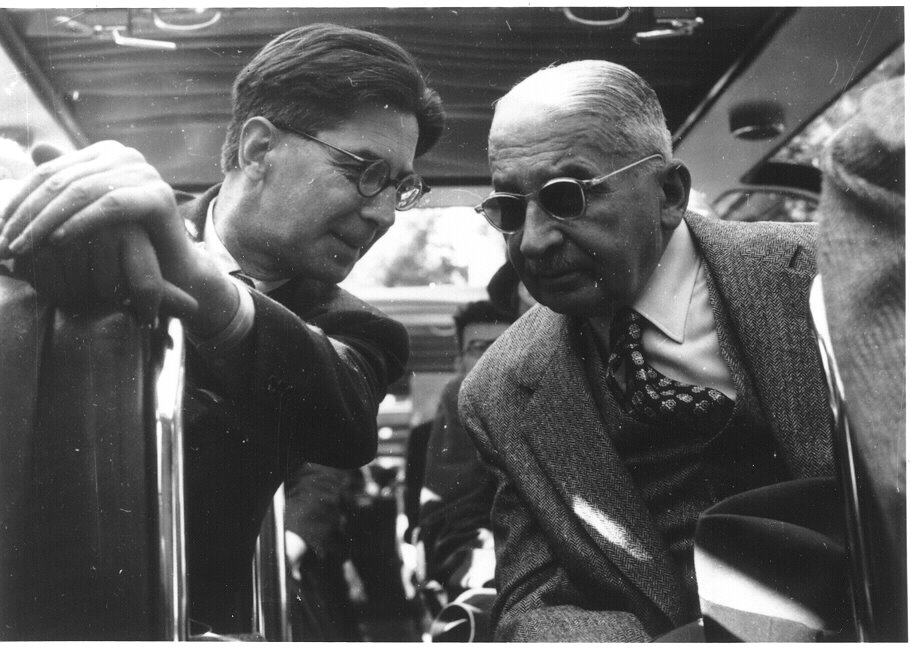
 L. v. Mises, Godfather of the Austrian Mafia
"Superficial critics of the capitalistic economic system are in the habit of directing their attacks principally against money... and yet they want this exchange to be achieved without any medium, or at least without a common medium, or money. They obviously regard the use of money as harmful and hope to overcome all social evils by eliminating it...
All the processes of our economic life appear in a monetary guise; and those who do not see beneath the surface of things are only aware of monetary phenomena and remain unconscious of deeper relationships. Money is regarded as the cause of theft and murder, of deception and betrayal. Money is blamed when the prostitute sells her body and when the bribed judge perverts the law. It is money against which the moralist declaims when he wishes to oppose excessive materialism. Significantly enough avarice is called the love of money; and all evil is attributed to it.
The confused and vague nature of such notions as these is obvious. It is not so clear whether it is thought that a return to direct exchange by itself will be able to overcome all the disadvantages of the use of money, or whether it is thought that other reforms will be necessary as well. The world makers and world improvers responsible for these notions feel no obligation to follow up their ideas inexorably to their final consequences. They prefer to call a halt at the point where the difficulties of the problem are just beginning. And this, incidentally, accounts for the longevity of their doctrines; so long as they remain nebulous, they offer nothing for criticism to seize upon."
--The Theory of Money and Credit, Chapter 6
 L. v. Mises, Godfather of the Austrian Mafia
Subscribe to:
Posts (Atom)


 Posts
Posts


